
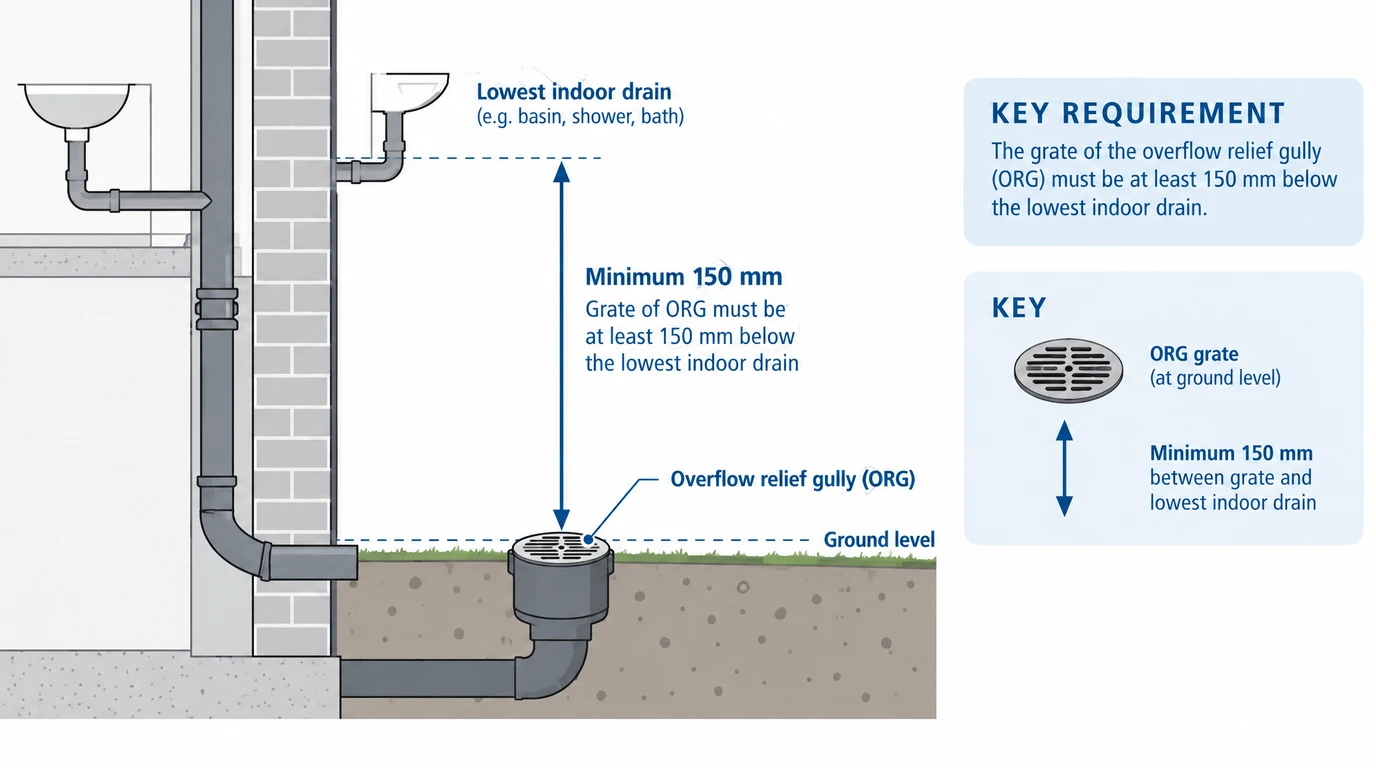
An overflow relief gully (ORG) is the small grated fitting outside your home, near the bathroom or laundry. If the sewer blocks, sewage overflows there instead of backing up inside the house. QBCC says its top must sit at least 150 mm below the lowest fixture and at least 75 mm above the ground, and it must never be covered.
What an ORG does
Every house connected to the sewer has at least one overflow relief gully. Think of it as a safety valve for your drains.
When the sewer drain between your house and the main is blocked, waste water from showers, sinks and toilets has nowhere to go. It backs up the pipe until it finds the lowest open point. The ORG is deliberately set lower than every fixture inside, so that lowest point is outside. The loose grate on top lifts off, and the overflow spills harmlessly into the yard instead of into your bathroom.
Where to find yours
Look outside, along the walls near the bathroom, laundry or kitchen. An ORG is usually:
- a round or square grate, often around 100 mm across
- set in the ground, a path or a small concrete surround
- loose rather than screwed down, so it can pop up
Some older homes have a gully trap that also takes waste water from a pipe discharging above it. Units and townhouses may have one ORG serving several dwellings.
The height rules
The QBCC’s guidance on overflow relief gullies sets out how high the gully must be:
- At least 150 mm below the lowest fixture it protects, such as a shower floor waste or toilet, so overflow happens outside first.
- At least 75 mm above the finished ground or paving around it, so rainwater and garden runoff can’t flow into the sewer.
- In flood-prone areas, at least 150 mm above the declared flood level.
Both limits matter. Too high and sewage comes up inside first. Too low and stormwater floods into the sewer, overloading it in heavy rain.
Why it must never be covered
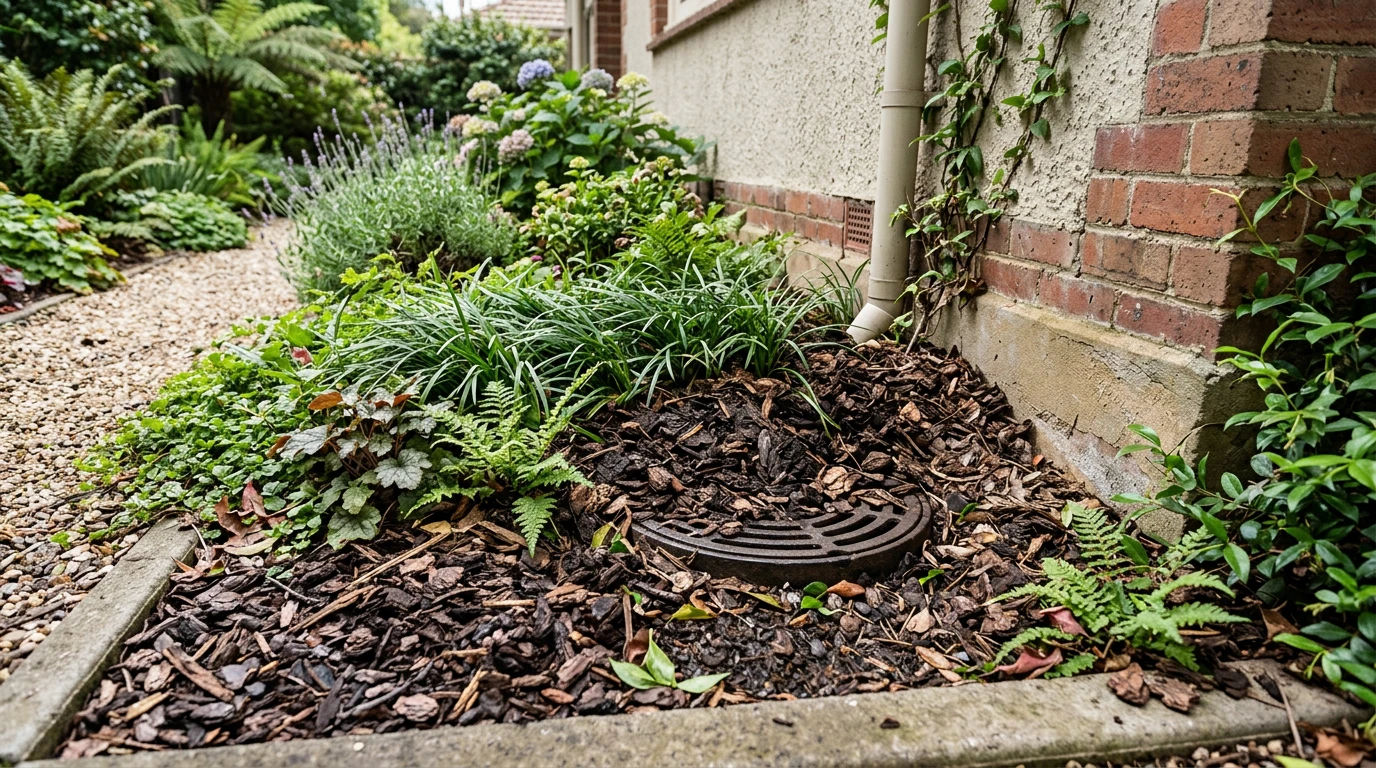
The most common ORG problem isn’t the gully itself, it’s what’s been put on top of it. Covering the grate with:
- new paving, concrete or decking
- garden beds, mulch, turf or soil
- pot plants or outdoor furniture
stops the grate lifting. When the sewer blocks, the overflow then has nowhere to go but back into the house, through the shower drain, floor waste or toilet. It also means a plumber can’t see or reach the gully when they need to.
Need a local plumber?
Morrisons Maintenance Plumbing has served Caloundra to Maroochydore for 14+ years. Book a plumber or call 1300 149 288.
If it’s overflowing
Water or sewage coming out of the ORG means the sewer drain downstream is blocked. The gully is doing its job. What to do:
- Stop using water inside as much as possible, including flushing, showers and the washing machine.
- Keep children and pets away from the overflow.
- Call a plumber to clear the blockage. Common causes are tree roots, wipes and fat build-up.
If the blockage is in your private sewer pipes on the property, it’s the owner’s responsibility. If it’s in Unitywater’s sewer network, Unitywater fixes it. A plumber can find where it is. For roots, our guide on tree roots in drains explains the options.
Renovations and landscaping
If you’re raising garden levels, laying new paving or building a deck near an ORG, the gully may need to be raised so it still sits at least 75 mm above the new surface. Raising or relocating an ORG is plumbing work for a licensed plumber. It’s much cheaper to plan for it during the renovation than to fix a covered gully after a sewage overflow inside.
Landscapers and builders: check for ORGs before you start, and leave them visible and accessible.
For blocked sewers, see our blocked drains service, call our emergency plumber line if sewage is overflowing, or book a plumber to check or raise an ORG.
Frequently asked questions
What is an overflow relief gully?
An overflow relief gully (ORG) is a grated drain fitting outside the house, connected to the sewer. If the sewer blocks, sewage escapes through its loose grate outside rather than backing up through toilets, showers and floor drains inside.
How high should an overflow relief gully be?
QBCC says the top of the gully must be at least 150 mm below the lowest fixture it protects and at least 75 mm above the finished ground or paving. In flood-prone areas it must be at least 150 mm above the declared flood level.
Can I cover my overflow relief gully?
No. The ORG must never be covered by landscaping, paving, decking or pot plants. If it’s covered, a sewer blockage can push sewage back into the house instead of out through the gully.
Why is sewage coming out of the gully outside my house?
It means the sewer drain downstream is blocked, often by roots or a buildup of wipes and fats. The ORG is doing its job. Stop using water inside and call a plumber to clear the blockage.
Who fixes an overflowing gully, me or Unitywater?
If the blockage is in your private sewer pipes on the property, it’s the owner’s responsibility. If it’s in Unitywater’s sewer network, Unitywater fixes it. A plumber can find where the blockage is.
Honest, upfront pricing from a local, family-owned plumber.
Call 1300 149 288 or request a quote. QBCC licence 1296541.