
Most blocked toilets clear with a flange plunger: cover the outlet, push down gently, then pump firmly 15 to 20 times. If that fails, a toilet auger can reach further. Don’t keep flushing, and skip caustic chemicals. If several fixtures gurgle or back up at once, the blockage is in the drain, not the toilet.
First, stop it overflowing
If the bowl is filling and hasn’t drained, don’t flush again. Every flush adds another cistern of water to a bowl that can’t empty.
- Lift the cistern lid and press the flush valve (the rubber seal at the bottom of the cistern) closed with your hand to stop more water coming in.
- Turn off the isolation valve behind the toilet, where the hose meets the wall. Turn it clockwise until it stops.
- Put old towels around the base in case the bowl overflows.
Method 1: flange plunger
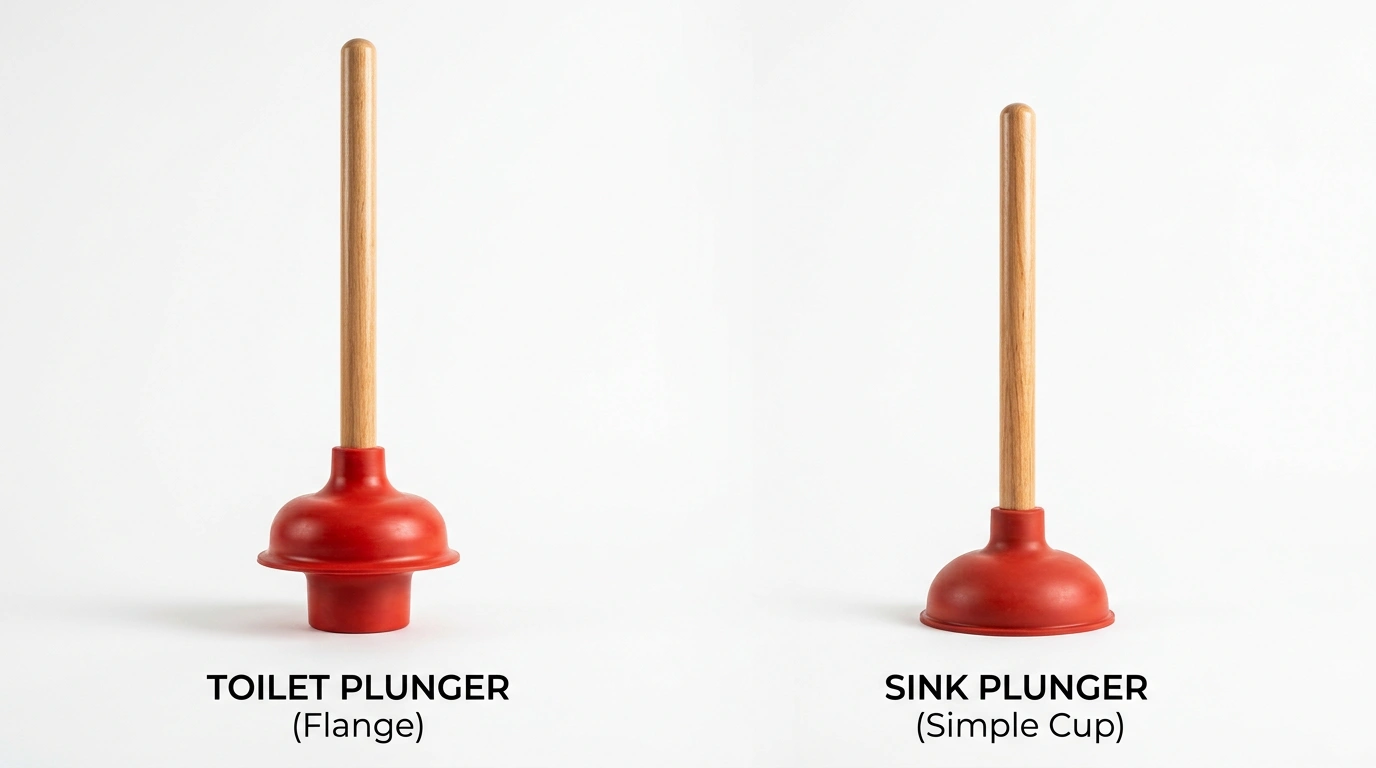
A toilet needs a flange plunger, which has a soft extra cup that fits into the outlet. A flat cup plunger (the type for sinks) can’t seal in a toilet bowl, so most of the force is lost.
- Make sure there’s enough water in the bowl to cover the plunger cup. Add some from a bucket if needed.
- Put the flange into the outlet and press down gently to push out the air.
- Pump firmly up and down 15 to 20 times, keeping the seal.
- Pull up sharply on the last stroke and see if the water drains.
- Repeat a few rounds. Most blockages of paper and waste clear this way.
Method 2: hot water and dish soap
For a blockage of toilet paper, warm water and detergent can help break it down:
- Squirt a generous amount of dish soap into the bowl.
- Pour in a bucket of hot tap water from about waist height.
- Leave it for about 20 minutes, then try the plunger again.
Use hot tap water, not boiling water. Boiling water can crack the ceramic bowl and damage the wax or rubber seal underneath.
Method 3: toilet auger
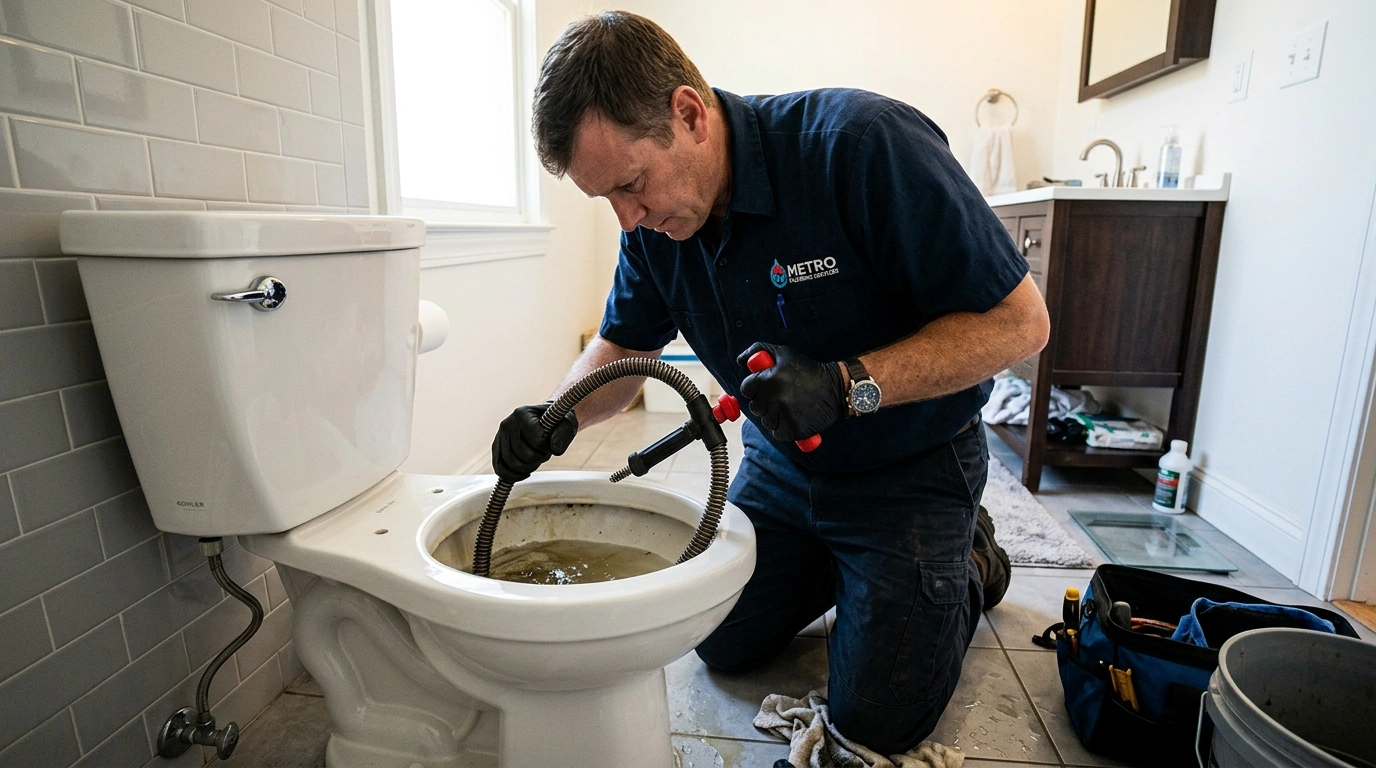
A toilet auger (closet auger) is a short, cranked drain snake designed for toilets, with a rubber sleeve that protects the bowl. They’re inexpensive at hardware stores.
- Put the end of the auger into the outlet with the sleeve against the bowl.
- Turn the handle while pushing gently to feed the cable around the bend.
- When you feel resistance, keep turning to break up or hook the blockage.
- Pull the cable back, then flush once to test, ready to stop the water if it rises.
Need a local plumber?
Morrisons Maintenance Plumbing has served Caloundra to Maroochydore for 14+ years. Book a plumber or call 1300 149 288.
What not to do
- Chemical drain cleaners. They rarely clear a toilet blockage, can damage pipes and seals, and leave a caustic bowl of water that can splash on you or the plumber.
- Wire coat hangers. They scratch the bowl and rarely reach the blockage.
- Boiling water. It can crack the pan.
- Repeated flushing. It just brings the water closer to the rim.
What never to flush
Most toilet blockages come from things that shouldn’t go down the toilet at all:
- wet wipes, including ones labelled “flushable”
- sanitary pads, tampons and nappies
- cotton buds and cotton balls
- paper towel and tissues, which don’t break down like toilet paper
- dental floss, hair and cat litter
- fats and cooking oil
The rule is simple: only the three Ps (pee, poo and toilet paper).
Signs it’s a drain problem
If the toilet itself is the only thing affected, the blockage is usually in the toilet or just past it. If you see any of these, the blockage is in the drain further down:
- the toilet gurgles when you run a sink or shower
- several fixtures are draining slowly at once
- water rises in the shower when you flush
- water or sewage is coming out of the overflow relief gully outside
That’s a job for a plumber with a drain machine or jetter. Our guide on how to unblock a drain explains how to tell where a blockage sits, and our blocked drains service covers the Coast.
If the toilet is the only one in the house, or sewage is overflowing, call our emergency plumber line. Otherwise, book a plumber for the next available time.
Frequently asked questions
What is the fastest way to unblock a toilet?
A flange plunger is usually fastest. Make sure there’s enough water to cover the plunger cup, seal it over the outlet, push down gently to remove air, then pump firmly 15 to 20 times. Repeat a few rounds before trying anything else.
Will hot water unblock a toilet?
Warm water with a squeeze of dish soap can help soften a paper blockage. Use hot tap water, not boiling water, because boiling water can crack the ceramic bowl. Pour it in from waist height and leave it for about 20 minutes.
Should I use chemical drain cleaner in a toilet?
It’s best not to. Caustic cleaners often don’t clear the blockage, can damage pipes and seals, and leave a dangerous mix in the bowl for you or a plumber to deal with. A plunger or auger is safer.
Why is my toilet gurgling?
Gurgling usually means air is being pushed through the water trap because the drain or vent is partly blocked. If other fixtures gurgle or drain slowly too, the blockage is likely further down the drain and needs a plumber.
When should I call a plumber for a blocked toilet?
Call a plumber if plunging and an auger don’t clear it, if several fixtures are slow or backing up, if sewage is coming up in the shower or overflowing outside, or if the toilet blocks repeatedly.
Honest, upfront pricing from a local, family-owned plumber.
Call 1300 149 288 or request a quote. QBCC licence 1296541.