
Flexi hoses are the braided hoses connecting taps, toilets and appliances to your water pipes. They’re under constant mains pressure, and when the inner rubber perishes or the braiding rusts they can burst without warning, flooding a home in minutes. Check them yearly and replace any that are rusty, kinked, bulging or more than about 5 to 10 years old.
What a flexi hose is and where to find them
A flexi hose is a flexible rubber hose wrapped in a braided metal sheath, with a fitting on each end. Plumbers use them because they’re quick to connect and forgive small misalignments between the pipe and the fixture. Most homes have more than people realise:
- under the kitchen sink, feeding the mixer tap (usually two, hot and cold)
- under each bathroom and laundry basin
- behind each toilet, feeding the cistern
- behind the dishwasher and fridge, if it has a water line
- on some hot water system and water filter installs
Unlike a garden hose, a flexi hose is under full water pressure 24 hours a day, even when nothing is turned on. That’s why a failure can release so much water so quickly, often while you’re asleep or away.
Why they burst
- The inner hose perishes. The rubber tube inside ages and hardens, then splits.
- The braid corrodes. Humidity, coastal salt air and cleaning chemicals stored under sinks can rust the braided sheath. Once the braid weakens, it can’t hold the inner hose together under pressure.
- Kinks and tight bends. A hose that’s too long, too short or bent sharply to fit puts constant stress on one spot.
- Poor-quality hoses. Cheap hoses that aren’t certified for Australian conditions may fail early.
- High water pressure and water hammer. Pressure spikes every time a tap or appliance valve snaps shut add wear.
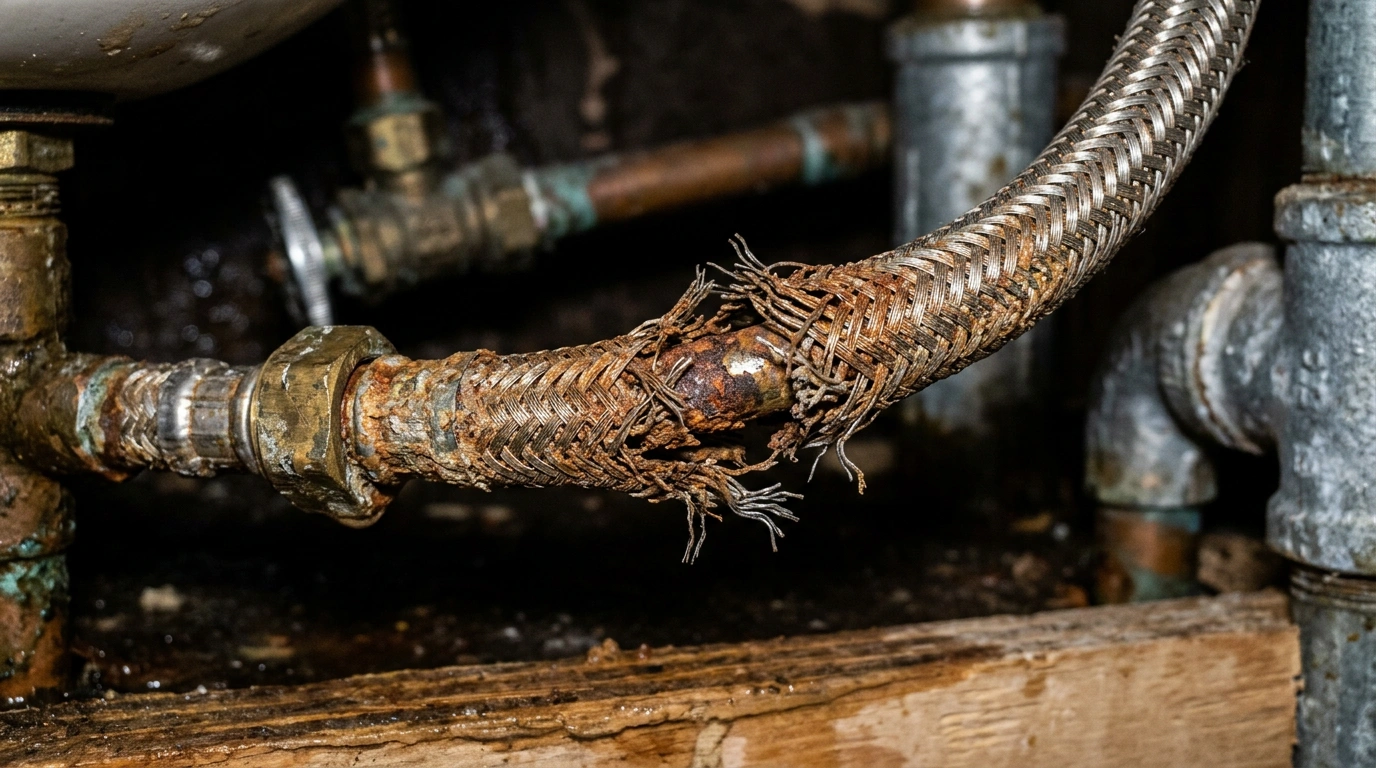
Warning signs checklist
Grab a torch and check under every sink and behind every toilet. Replace any hose that shows:
- rust spots, brown staining or discolouration on the braid
- fraying or broken strands in the braid
- a bulge or swelling anywhere along the hose
- a kink or sharp bend
- moisture, drips or crusty build-up at either fitting
- a date tag showing it’s many years old, or no idea how old it is
If a hose is dripping, put a container under it and turn off the isolation valve until it can be replaced.
Need a local plumber?
Morrisons Maintenance Plumbing has served Caloundra to Maroochydore for 14+ years. Book a plumber or call 1300 149 288.
How long do flexi hoses last?
It depends on the quality of the hose, your water pressure and where it’s installed. Manufacturers’ guidance varies, but many recommend replacing flexi hoses within 5 to 10 years, and sooner if you see any of the warning signs above. Some hoses carry a tag showing the manufacture date.
Hoses in cupboards with cleaning chemicals, or in bathrooms that stay humid, tend to deteriorate faster. In homes near the beach, salt air can speed up corrosion.
Insurance and strata
Burst flexi hoses are one of the more common causes of water damage claims, and in units the water often reaches the neighbours below. Some insurers and strata schemes expect owners to maintain these hoses, and a policy may not cover damage caused by lack of maintenance. Check your own policy or by-laws, and keep a record when hoses are replaced.
For landlords and property managers, a flexi hose check is an easy item to add to a routine inspection or to a water efficiency check.
Replacing them properly
In Queensland, replacing a flexi hose connected to the water supply isn’t on the QBCC’s list of work homeowners can do themselves, so it should be done by a licensed plumber. A good replacement means:
- WaterMark-certified hoses rated for Australian conditions
- the right length, so there are no kinks or tight loops
- a quality braid, suited to humid or coastal conditions
- checking the isolation valves at the same time, since old valves can seize or leak
- checking the water pressure, because high pressure shortens the life of every hose in the house
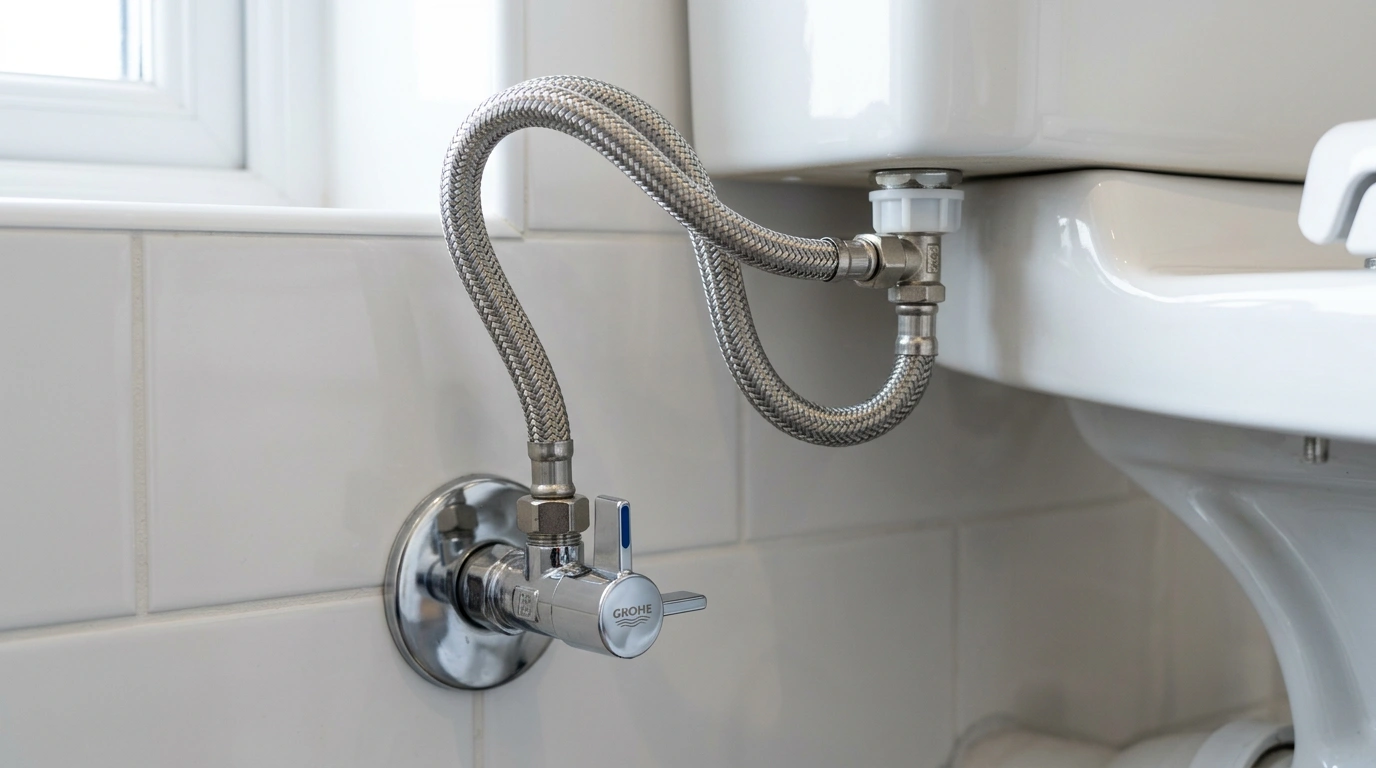
Replacing all the hoses in a home in one visit is usually quicker and better value than waiting for them to fail one by one. See our plumbing services for what we cover.
What to do if one bursts
- Turn off the isolation valve under the sink or toilet if you can reach it safely. It’s the small tap where the hose connects to the wall pipe.
- If you can’t reach it, turn off the water main at the meter, usually near the front boundary.
- Switch off power to any power points or appliances that are wet, at the switchboard if needed.
- Move valuables and start soaking up water.
- Call an emergency plumber.
If you suspect a slow leak from a hose you can’t see, such as behind a dishwasher or inside a wall cavity, our guide on how to find a water leak explains the meter test, and our leak detection service can find it.
Frequently asked questions
How long do flexi hoses last?
It varies with quality, water pressure and conditions, and manufacturers’ guidance differs. Many recommend replacing them within 5 to 10 years, and sooner if they show rust, fraying, bulging or kinks. Checking them once a year is the simplest way to catch problems early.
Why do flexi hoses burst?
Most burst because the inner rubber hose perishes with age or the outer braided sheath corrodes, often from humidity or cleaning products stored under the sink. Kinks, tight bends, poor-quality hoses and high water pressure all add stress.
How do I know if my flexi hose needs replacing?
Look for rust spots or discolouration on the braid, fraying, bulges, kinks, moisture at the fittings, or a hose that’s been in place for many years. Any of these is a reason to replace it before it fails.
Can I replace a flexi hose myself in Queensland?
No. Replacing a flexi hose connected to the water supply is regulated plumbing work in Queensland and should be done by a QBCC-licensed plumber. A plumber will also fit WaterMark-certified hoses at the right length.
What should I do if a flexi hose bursts?
Turn off the isolation valve under the sink or toilet if you can reach it safely, or turn off the water main at the meter. Turn off power to any wet electrical outlets, move valuables, and call an emergency plumber.
Honest, upfront pricing from a local, family-owned plumber.
Call 1300 149 288 or request a quote. QBCC licence 1296541.