
For most Sunshine Coast homes, a heat pump is the best all-rounder: it costs more upfront than an electric tank but uses far less power, works day and night in our mild climate, and qualifies for rebate certificates. Solar suits homes with a clear north-facing roof. Electric storage is cheapest to buy but dearest to run; gas suits homes already on gas.
The four options at a glance
Supply prices below are a 2026 market guide for the unit only; installation is extra. Our guide to hot water system cost explains what installation adds.
| Type | How it works | Supply price guide | Running cost | Best for |
|---|---|---|---|---|
| Electric storage | An element heats water in an insulated tank | $550 to $2,100 | Highest (lower on off-peak) | Tight budgets, like-for-like swaps, small households |
| Gas storage or continuous flow | A gas burner heats a tank, or heats water only as you use it | $850 to $1,900 | Moderate | Homes already connected to gas |
| Heat pump | Draws heat from the air into the water, like an air conditioner in reverse | $2,800 to $5,200 | Low | Most homes, especially with rooftop solar |
| Solar (electric or gas boosted) | Roof collectors heat the water, with a booster for cloudy days | $3,800 to $7,500 | Lowest in sunny weather | Homes with a clear north-facing roof |
Heat pumps
A heat pump works like a reverse-cycle air conditioner. A fan draws air over a coil filled with refrigerant, which picks up heat from the air. A compressor concentrates that heat and transfers it into the water tank. Because it moves heat rather than making it, a heat pump uses a fraction of the electricity of a standard element.
Why they suit the Sunshine Coast:
- Mild climate. Heat pumps are most efficient when the air is warm. South-east Queensland’s temperatures keep them working efficiently year round.
- Rooftop solar. Put the heat pump on a timer to run in the middle of the day and it can use your own solar power instead of grid electricity.
- No roof needed. The whole unit sits at ground level, so roof shape and shading don’t matter.
Things to plan for: heat pumps hum like an air conditioner’s outdoor unit while running, so place them away from bedroom windows and the neighbours’ outdoor areas. They also need airflow around them and a drain for condensation.
Solar hot water
Solar systems use collectors on the roof to heat water, either with a tank on the roof or a tank at ground level with water pumped up and down. A booster (electric or gas) tops up the temperature on cloudy days.
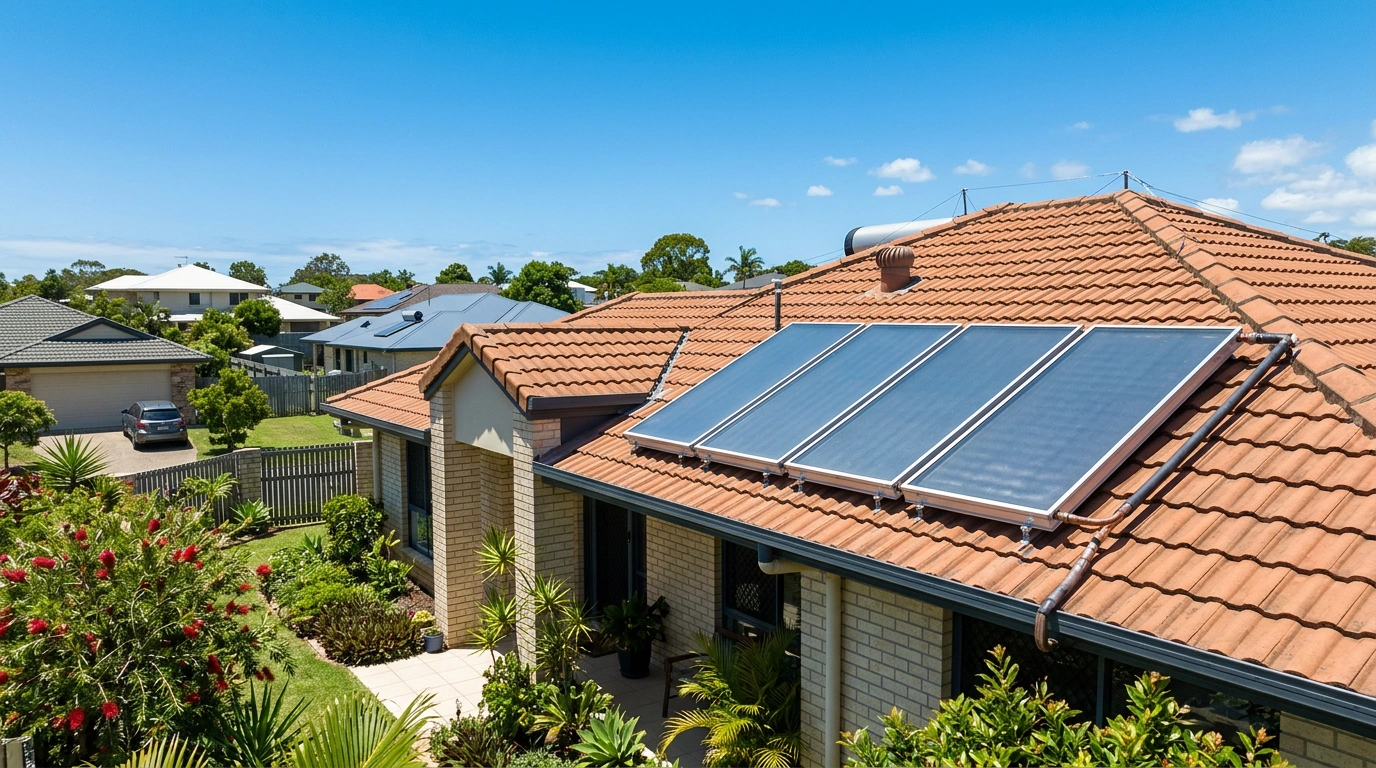
Solar can have the lowest running cost of all in a sunny climate, but:
- it needs a roof section facing roughly north, without shade from trees or neighbouring buildings
- it has the highest upfront cost
- there’s more to maintain, with collectors, pumps and pipework on the roof
- in long cloudy or wet spells, the booster does most of the work
Many homes with rooftop solar panels now choose a heat pump instead, because the panels already capture the sun and the heat pump uses that power.
Need a local plumber?
Morrisons Maintenance Plumbing has served Caloundra to Maroochydore for 14+ years. Book a plumber or call 1300 149 288.
Electric storage
Electric storage is the traditional Queensland hot water system: a tank with one or two elements, often on an off-peak tariff so it heats overnight at a cheaper rate. It’s the cheapest to buy and the simplest to replace like for like.
The catch is running cost. On a standard tariff an electric tank is usually the most expensive way to heat water. It still makes sense for small households, for rentals where the owner doesn’t pay the power bill, or when the budget simply can’t stretch further.
Gas
Gas comes as a storage tank or a continuous flow (instantaneous) unit. Continuous flow heats water only as you use it, so it never runs out and doesn’t waste energy keeping a tank hot.
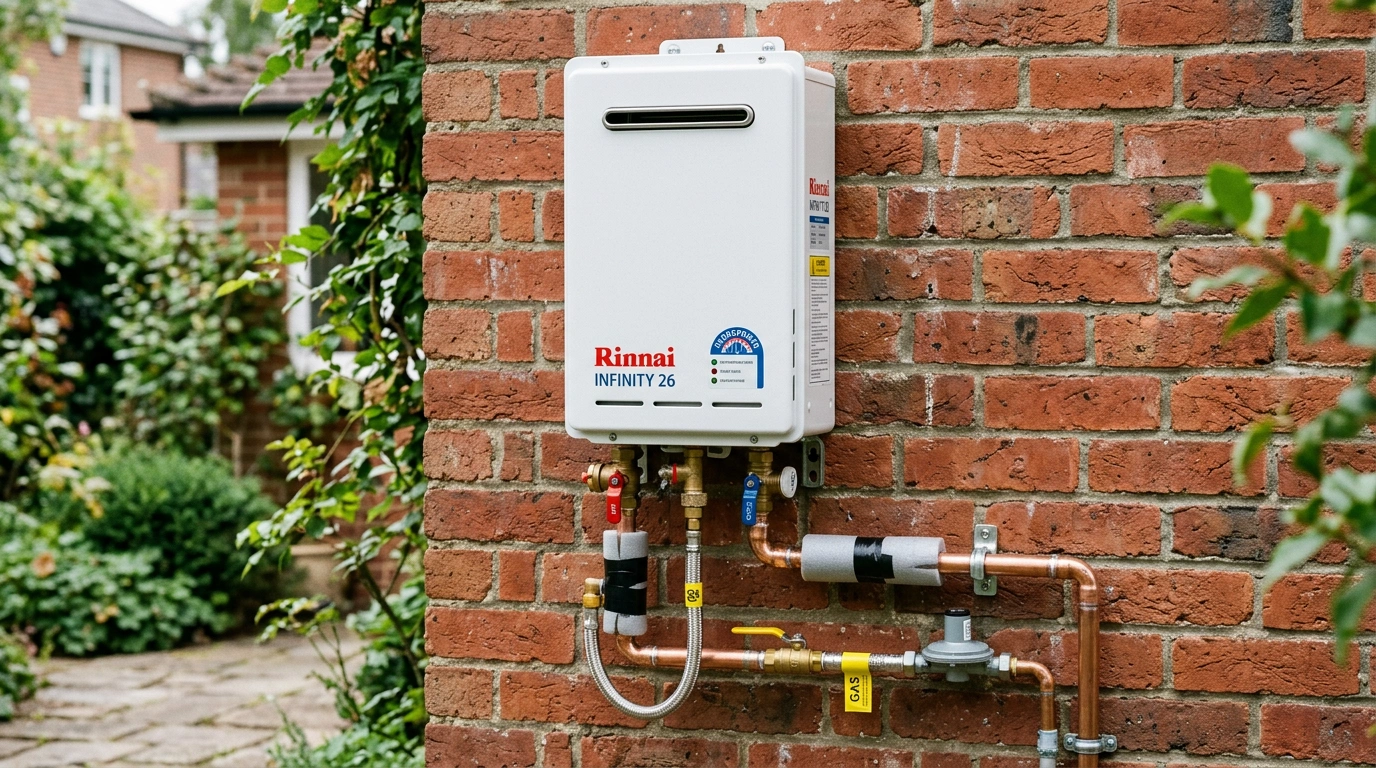
Gas makes most sense if your home is already connected to mains gas or uses bottled gas for cooking. Connecting gas just for hot water adds cost, and many households are moving to all-electric homes that pair a heat pump with solar.
Rebates
Heat pump and solar hot water systems usually qualify for federal small-scale technology certificates (STCs). The installer normally applies these as a discount on the quote, so compare quotes on the final price.
Queensland has also offered state rebates for households replacing old electric or gas systems with an efficient system. These programs change and close, so check what’s open when you’re ready to buy and ask your plumber to show any rebate on the quote.
Which one should you choose?
- You have rooftop solar and want low bills: heat pump on a daytime timer.
- You have a clear north-facing roof and no solar panels: solar or heat pump; compare quotes after rebates.
- You’re already on gas and want endless hot water: gas continuous flow.
- Tight budget, small household or a rental: electric storage, ideally on an off-peak tariff.
- Big household with high usage: a heat pump or solar pays back faster because you use more hot water.
Installation rules
Installing any hot water system in Queensland is regulated plumbing work for a QBCC-licensed plumber. Solar and heat pump systems also need an installer with a QBCC solar and heat pump endorsement. Every new and replacement system needs a temperature control device so water reaches bathrooms at no more than 50°C, while the tank stores water at 60°C or more (Business Queensland).
See our hot water systems service, or our page on hot water in Currimundi if you’re in that area.
Frequently asked questions
Is a heat pump or solar hot water better?
Both cut running costs sharply compared with electric storage. A heat pump works day and night regardless of roof orientation and suits most Sunshine Coast homes. Solar can be cheaper to run where there’s a clear north-facing roof, but costs more upfront and needs boosting on cloudy days.
Do heat pumps work well on the Sunshine Coast?
Yes. Heat pumps extract heat from the surrounding air, so they work best in mild and warm climates like south-east Queensland. They’re efficient all year here, and running them during the day can use power from rooftop solar.
Are heat pumps noisy?
They make a low hum similar to an air conditioner’s outdoor unit while running. Place them away from bedroom windows and neighbours’ living areas, and set a timer to run them during the day.
What rebates are there for heat pump hot water in Queensland?
Heat pumps and solar hot water systems usually qualify for federal small-scale technology certificates, which reduce the price. Queensland has also offered state rebates for replacing old electric or gas systems with a heat pump. Check what’s open when you buy.
Is electric or gas hot water cheaper?
Electric storage units are cheaper to buy but usually cost more to run, especially on a standard tariff. Gas can be cheaper to run if your home already has gas connected. For many homes, a heat pump now beats both on running cost.
Honest, upfront pricing from a local, family-owned plumber.
Call 1300 149 288 or request a quote. QBCC licence 1296541.