
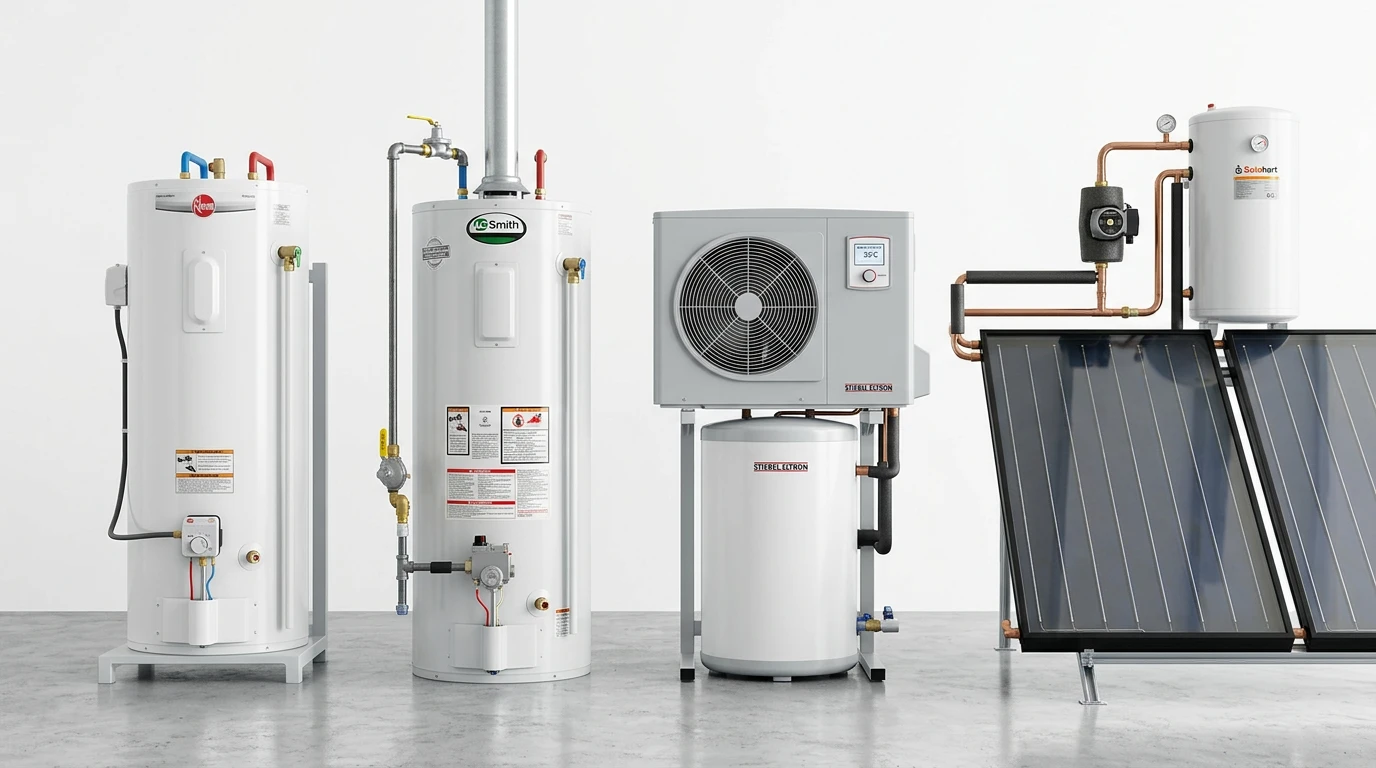
As a guide, the unit alone costs about $550 to $2,100 for electric storage, $850 to $1,900 for gas, $2,800 to $5,200 for a heat pump and $3,800 to $7,500 for solar (2026 supply prices). Installation, removal of the old unit, a tempering valve and any changes to plumbing or power come on top. Like-for-like replacements cost least.
Hot water system prices by type
The biggest factor in the price is the type of system. These are typical 2026 supply prices for the unit only, taken from a Queensland market price guide. Treat them as a starting point: brand, capacity and features move a unit around within each range.
| Type | Supply price (unit only) | Running cost | Notes |
|---|---|---|---|
| Electric storage | $550 to $2,100 | Highest, unless on an off-peak tariff | Cheapest to buy and simplest to swap |
| Gas storage or continuous flow | $850 to $1,900 | Moderate, depends on gas prices | Continuous flow never runs out of hot water |
| Heat pump | $2,800 to $5,200 | Low: uses a fraction of the power of an electric tank | Works well in the Sunshine Coast climate |
| Solar (with electric or gas boost) | $3,800 to $7,500 | Lowest in sunny weather | Needs suitable north-facing roof space |
What installation adds
The unit price is only part of the quote. A licensed plumber also allows for:
- Removal and disposal of the old system.
- A tempering valve. Queensland requires water delivered to bathrooms at no more than 50°C, so a temperature control device goes on every new and replacement system (Business Queensland).
- Valves and fittings, such as isolation, non-return and relief valves, plus any pipework that needs updating.
- A safe tray if the system sits inside the house or in a cupboard.
- Electrical or gas work if the new unit needs a different power supply, circuit or gas line.
- Relocating the unit if it’s moving to a new spot.
- Access. A tank in a tight laundry cupboard or up a flight of stairs takes longer than one on an outside wall.
A good quote lists these items rather than hiding them in one number, so you can compare quotes fairly.
Like-for-like vs switching type
Swapping an old electric tank for a new electric tank of a similar size is usually the cheapest job. The connections, power supply and position are already there, so most of the work is disconnecting the old unit and connecting the new one.
Switching types costs more up front because more changes:
- Electric to heat pump: the unit needs outdoor space with airflow, a suitable power supply and room for the condensate drain.
- Electric to solar: collectors go on the roof, with pipework back down to the tank.
- Electric to gas: needs a gas supply, flue clearances and a gas fitter.
Those extra costs are often worth it over the life of the system, which is why running costs matter as much as the price tag.
Need a local plumber?
Morrisons Maintenance Plumbing has served Caloundra to Maroochydore for 14+ years. Book a plumber or call 1300 149 288.
Rebates and certificates
Heat pump and solar hot water systems usually qualify for federal small-scale technology certificates (STCs). They’re normally applied as a discount on the quote, so the price you’re given may already include them.
Queensland has also offered state rebates for efficient hot water systems in recent years. Programs open, change and close, so check what’s available when you buy and ask your plumber to show any rebate on the quote.
Upfront cost vs running cost
Electric storage systems are cheap to buy but typically the most expensive to run. Heat pumps and solar cost more to buy but use far less electricity, so they can pay back the difference over their life. Gas sits in the middle, depending on gas prices at your address.
A few things change the maths:
- Off-peak tariffs make electric storage cheaper to run, because the tank heats overnight at a lower rate.
- Rooftop solar panels can power a heat pump or electric tank during the day if it’s on a timer.
- Household size. A bigger household uses more hot water, so a more efficient system pays back sooner.
Our guide to heat pump vs solar vs electric hot water compares the options in more detail.
Choosing the right size
A system that’s too small runs out in the evening. One that’s too big costs more to buy and keeps more water hot than you need. Size depends on:
- how many people live in the home
- how many bathrooms and showers are used at the same time
- whether you have a big bath, a spa or other high-use fixtures
- whether the system is on continuous power or an off-peak tariff, which needs a larger tank
Your plumber should ask about these before recommending a size.
Getting an accurate quote
You’ll get a faster, more accurate quote if you can tell the plumber:
- The type and size of your current system.
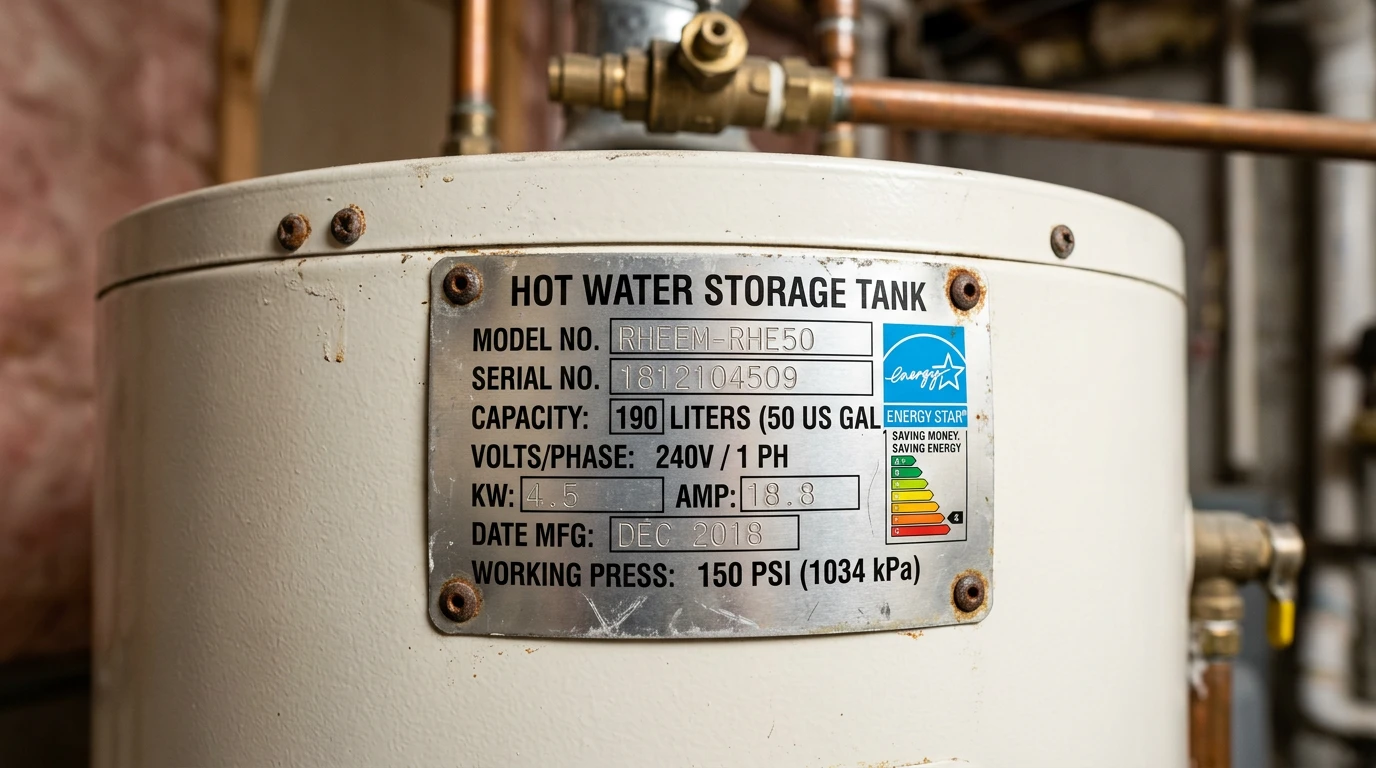
- A photo of the data plate on the tank, which shows the brand, model and capacity.
- Where it’s located and how easy it is to reach.
- How many people live in the home.
- Whether you want like-for-like or are open to a different type.
Installing or replacing a hot water system is regulated plumbing work in Queensland, so it must be done by a QBCC-licensed plumber. See our hot water system services or, if you’re near Caloundra, our page on hot water in Pelican Waters. If your system has already failed and you’ve got no hot water or water leaking, call our emergency plumber line.
Frequently asked questions
How much does it cost to replace a hot water system in QLD?
It depends on the type. As a 2026 guide, supply prices run from about $550 for a small electric unit to $7,500 for a large solar system, before installation. A like-for-like electric or gas replacement is usually the cheapest; switching to a different type costs more because of plumbing and electrical changes.
What is the cheapest hot water system to run?
A heat pump is usually the cheapest to run because it uses a fraction of the electricity of a standard electric storage unit. Solar can be cheaper still in sunny weather, but it needs roof space and boosting in cloudy spells.
Are there rebates for hot water systems in Queensland?
Heat pump and solar hot water systems usually qualify for federal small-scale technology certificates, which reduce the upfront price. Queensland has also run state rebates for efficient hot water. Check what’s open when you buy, and ask your plumber to include any rebate in the quote.
Does a new hot water system need a tempering valve?
Yes. In Queensland a temperature control device must be fitted to all new and replacement hot water systems so water reaches bathroom taps at no more than 50°C, while the tank stores water at 60°C or more to control Legionella.
Can I install a hot water system myself?
No. Installing or replacing a hot water system is regulated plumbing work in Queensland and must be done by a QBCC-licensed plumber. Solar and heat pump systems also need an installer with a QBCC solar and heat pump endorsement.
Honest, upfront pricing from a local, family-owned plumber.
Call 1300 149 288 or request a quote. QBCC licence 1296541.