
Turn off every tap and water-using appliance, note your water meter reading, and check it again after at least an hour without using any water. If the numbers have moved, you have a leak somewhere after the meter. Check toilets and taps first; if they’re fine, a licensed plumber can find hidden leaks under slabs, in walls or underground.
The meter test, step by step
This is the same simple test Unitywater recommends, and it takes about an hour of not using water.
- Find your water meter. On most Sunshine Coast homes it’s near the front boundary, often in a small box or behind a cover in the lawn or garden. Units may have meters grouped in a cupboard or near the driveway.
- Turn off all water use. Taps, showers, the dishwasher and washing machine, irrigation, pool top-up and anything else that uses water. Don’t flush the toilet during the test.
- Record the reading. Take a photo of the meter showing all the numbers, including the red ones, which measure small amounts.
- Wait at least an hour. Longer is better. Overnight works well if you can avoid using water.
- Check again. If any numbers have moved, water is escaping somewhere on your side of the meter.
If the meter shows a leak, go straight to the toilets. Put a few drops of food colouring in each cistern, wait 15 minutes without flushing, and look for colour in the bowl. A leaking toilet is the most common cause of a small, constant leak.
Signs you have a hidden leak
- a water bill much higher than the same time last year
- soggy patches of lawn or garden that don’t dry out, or unusually green grass
- the meter box full of water
- damp walls, bubbling paint or swollen skirting boards
- cracked or lifting floor tiles
- the hot water system running more than usual
- the sound of running water when everything is turned off
Where leaks hide
| Location | Clues | Can you check it yourself? |
|---|---|---|
| Toilets | Cistern refills on its own, trickle in the bowl | Yes: food colouring test |
| Taps and mixers | Drips, water at the base of the tap | Yes: look and listen |
| Hot water relief valve | Constant flow from the drain line, not just while heating | Yes: look at the drain line |
| Flexi hoses under sinks and toilets | Damp cupboard floor, rust on the fittings | Yes: look under sinks with a torch |
| Pipes under the slab | Warm spots on the floor, cracked tiles, damp skirting | No: needs detection equipment |
| Underground service pipe from the meter | Soggy ground between the meter and house | No: needs a plumber |
| Irrigation | Wet patches near sprinklers, meter moves when the system is off | Partly: isolate the irrigation and retest |
| Pool | Water level dropping faster than evaporation | Partly: a pool professional can test |
Need a local plumber?
Morrisons Maintenance Plumbing has served Caloundra to Maroochydore for 14+ years. Book a plumber or call 1300 149 288.
How plumbers find hidden leaks
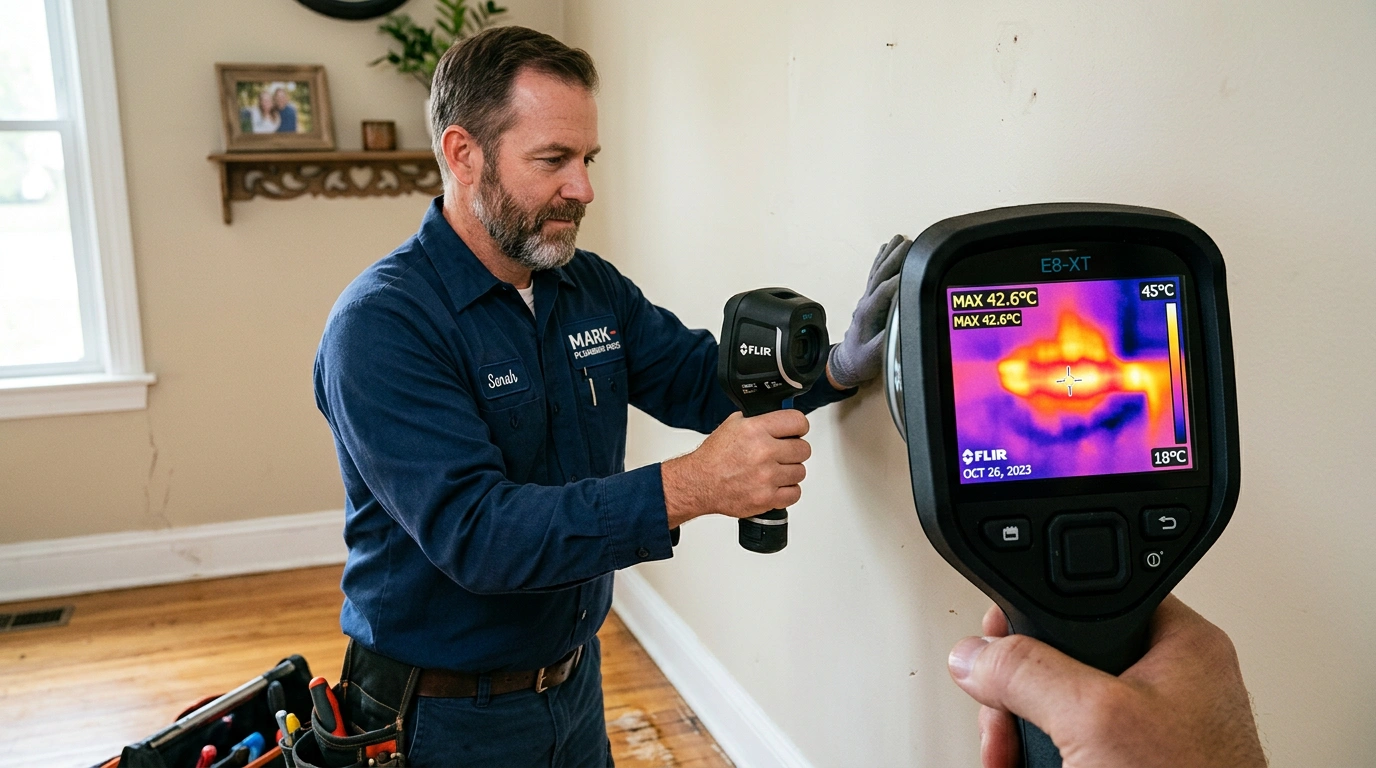
When the meter says there’s a leak but you can’t see it, leak detection equipment pinpoints it so only a small area needs opening up:
- Acoustic listening. Sensitive microphones pick up the sound of water escaping from a pressurised pipe under concrete or soil.
- Thermal imaging. A thermal camera shows temperature differences in walls and floors, which helps trace hot water leaks and damp areas.
- Pressure testing. Isolating sections of pipe and testing each one narrows down which run is leaking.
- Tracer gas. On harder jobs, a safe gas is put through the pipe and detected where it escapes.
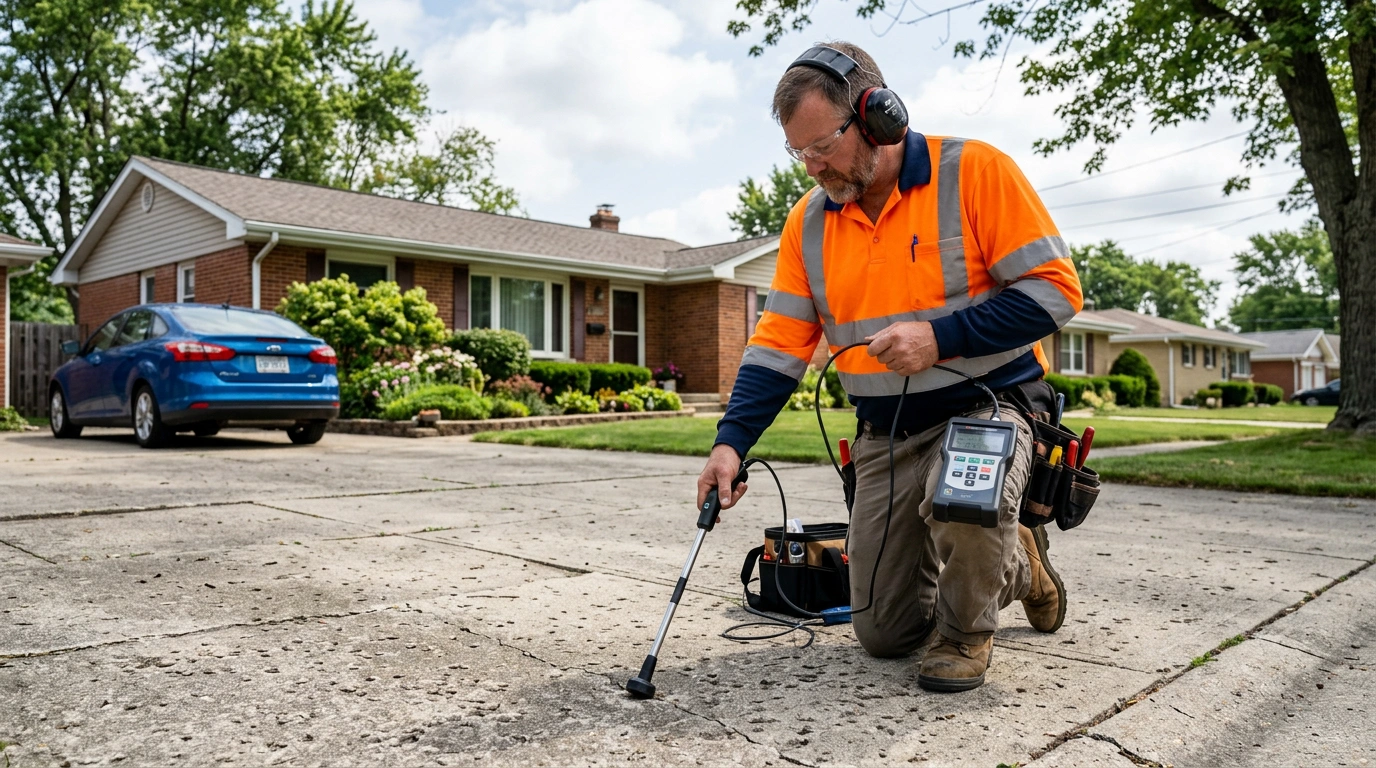
Once the leak is found, the plumber can repair that section, or reroute the pipe if it’s under a slab and hard to reach. See our leak detection service for how we approach it.
Who pays: you or Unitywater?
Unitywater looks after its water mains and the meter. Pipes on your side of the meter, all the way to and through the house, are the property owner’s responsibility to find and fix with a licensed plumber.
If the leak was hidden, you may be able to get part of the cost back on your bill. Unitywater’s concealed leak allowance applies to leaks you couldn’t reasonably have seen, such as those underground, in concrete or under the building. The main conditions:
- the leak must be repaired by a licensed plumber
- you apply within 12 months of the repair
- it’s available for the first claim on a property
- it credits 70% of the excess water charges (100% for eligible pensioners) and 100% of the excess sewerage charges
Leaks from taps, toilets, appliances, irrigation and pools aren’t covered. Keep the plumber’s invoice showing where the leak was and when it was fixed, because you’ll need it for the claim.
Landlords and tenants
In a rental, a leak can quickly turn into a dispute over a water bill. Tenants who pay for water consumption shouldn’t be paying for water lost to a faulty fixture, and owners are responsible for repairs. Our guide to water efficiency certificates for Queensland rentals explains the water charging rules. Fixing leaks quickly and keeping the plumber’s report protects both sides.
If water is pouring out and you can’t stop it at the fixture, turn off the water at the meter and call our emergency plumber line.
Frequently asked questions
How do I check if I have a water leak?
Turn off all taps and water-using appliances, write down or photograph your water meter reading including the red numbers, and check it again after at least an hour without using water. If the reading has changed, water is escaping somewhere on your property.
How do plumbers find hidden water leaks?
Leak detection plumbers use acoustic listening equipment to hear water escaping, thermal imaging to spot temperature changes in walls and floors, pressure testing to isolate sections of pipe, and sometimes tracer gas. This pinpoints the leak so only a small area needs opening up.
Who is responsible for a water leak, me or Unitywater?
Leaks on your side of the water meter are the property owner’s responsibility to find and fix. Leaks on the council or Unitywater side of the meter, including the meter itself, are Unitywater’s to repair.
Can I get money back for a hidden leak on my water bill?
Unitywater offers a concealed leak allowance for leaks hidden underground, in concrete or under the building. The leak must be repaired by a licensed plumber and claimed within 12 months, and it’s available once per property. It credits most of the excess water and sewerage charges.
Why is my water bill suddenly high?
The most common causes are a running toilet, a dripping tap, a leaking hot water relief valve, an irrigation fault, or a hidden leak in an underground or under-slab pipe. Do the meter test first to confirm whether it’s a leak or higher usage.
Honest, upfront pricing from a local, family-owned plumber.
Call 1300 149 288 or request a quote. QBCC licence 1296541.