
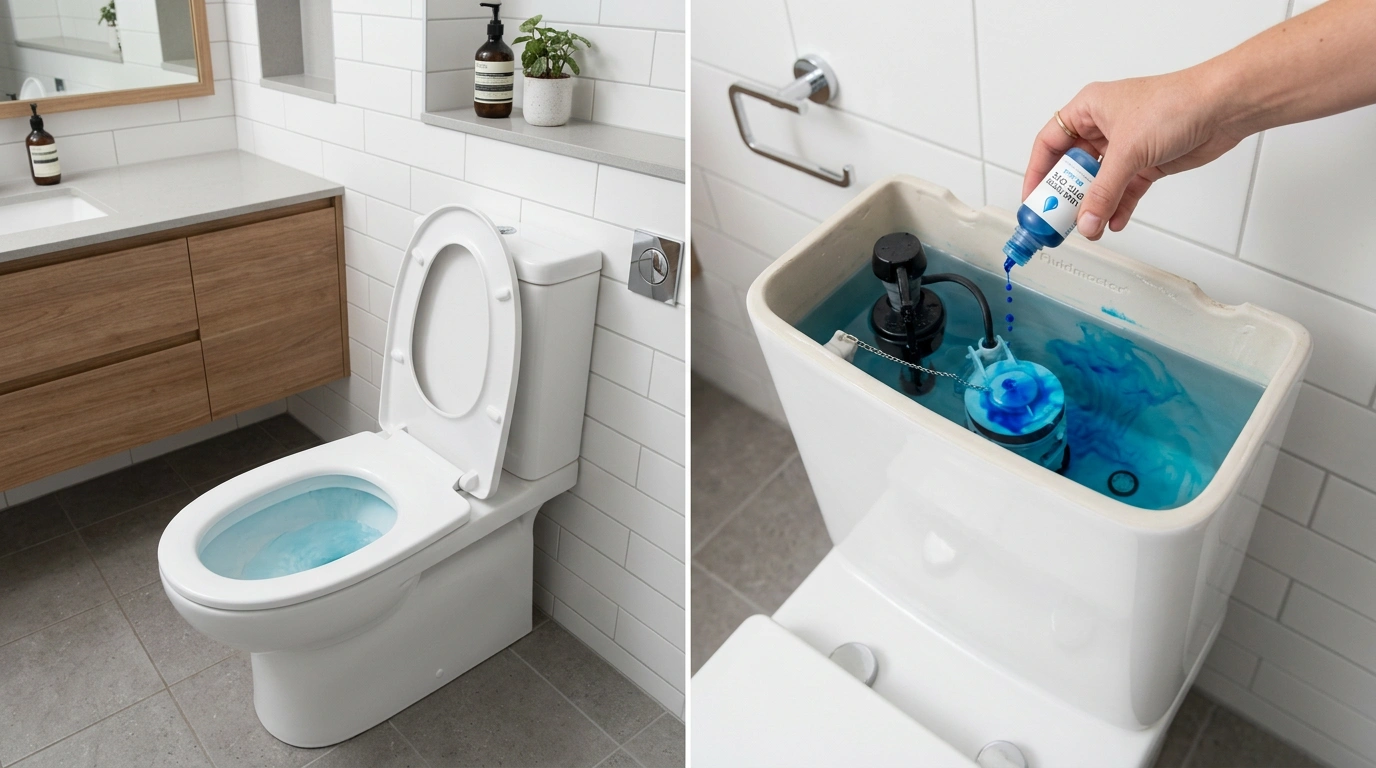
A running toilet is usually a worn washer or seal inside the cistern letting water trickle into the bowl, or a float valve set too high. Put a few drops of food colouring in the cistern and wait 15 minutes: colour in the bowl means a leak. Water pooling at the base points to a failed seal and needs a plumber.
How much water a running toilet wastes
A toilet that trickles into the bowl runs all day and night. Even a small, silent leak adds up over a billing period, and a toilet stuck running hard wastes far more. On the Sunshine Coast you pay Unitywater for every litre, and in a rental that often lands on the tenant’s bill, so it’s worth fixing early.
If your bill has jumped and you’re not sure why, start with the meter test in our guide on how to find a water leak. Toilets are the most common culprit.
The food colouring test
A silent leak is one you can’t hear or see. To check:
- Lift the cistern lid and add a few drops of food colouring to the water in the cistern.
- Don’t flush. Wait 15 to 20 minutes.
- Look in the bowl. Any colour in the bowl means water is leaking from the cistern.
- Flush afterwards to clear the colour.
Do it for every toilet in the house.
Causes and fixes
| Symptom | Likely cause | DIY or plumber? |
|---|---|---|
| Water runs into the bowl constantly | Worn flush valve washer or seal | DIY if it’s a washer covered by QBCC’s list; otherwise plumber |
| Cistern hisses and refills on its own | Leaking flush valve, or the inlet valve not shutting off | Washer: DIY. Inlet valve: plumber |
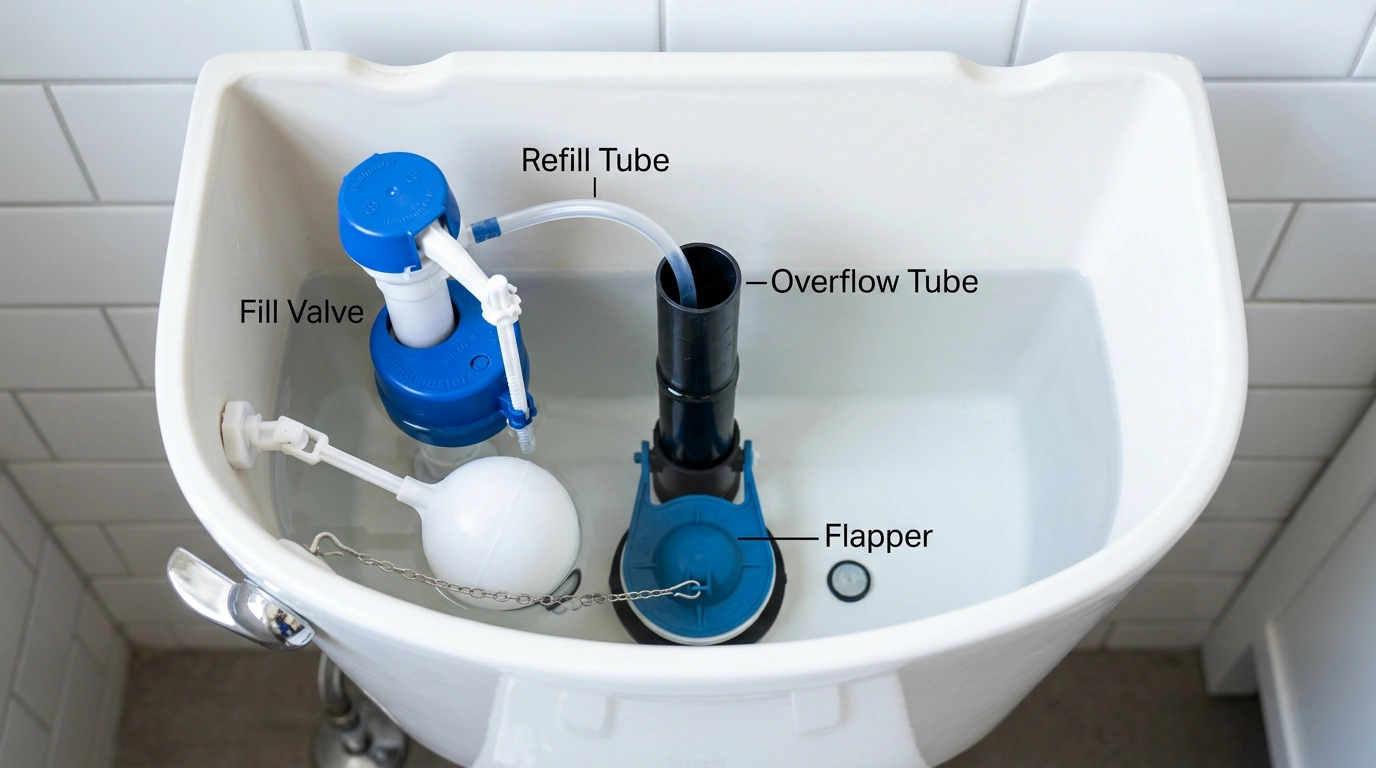
| Water spills into the overflow pipe | Float valve set too high or failing | Adjusting or replacing the float valve washer: DIY. New valve: plumber |
| Water pools around the base | Failed pan seal or connector to the sewer pipe | Plumber |
| Drips between the cistern and pan | Worn seal or loose bolts on a close-coupled cistern | Plumber |
| Crack in the bowl or cistern | Damaged ceramic | Plumber: replace the toilet or cistern |
What you can fix yourself in Queensland
The QBCC’s unregulated plumbing guide lets homeowners replace a few washers inside the cistern:
- the cistern drop valve washer
- the float valve washer
- suction cup washers
Turn off the isolation valve behind the toilet first and flush to empty the cistern. Take the old washer to the hardware store so you get the right one, as cisterns vary between brands.
Anything beyond those washers, such as replacing the inlet valve, the flush valve assembly, the pan connector or the toilet itself, is regulated plumbing work for a licensed plumber.
Need a local plumber?
Morrisons Maintenance Plumbing has served Caloundra to Maroochydore for 14+ years. Book a plumber or call 1300 149 288.
Leaks at the base of the toilet
Water around the base of the toilet is more serious than a running cistern. It usually means the seal or connector between the pan and the sewer pipe has failed, or the pan is cracked. Because it can involve waste water, and can seep into the floor, it needs attention promptly:
- wipe it up and check whether it comes back after a flush
- check the flexi hose and isolation valve behind the toilet, which can drip down to the floor
- if it’s coming from under the pan, call a plumber
Left alone, a base leak can rot timber floors, lift tiles and cause smells.
When to replace the toilet or cistern
Sometimes a repair isn’t worth it:
- the pan or cistern is cracked
- the toilet is old and parts are no longer made
- it’s a single-flush toilet, which uses far more water than a modern dual-flush model
- it keeps failing even after repairs
A new dual-flush toilet with a good WELS rating uses much less water. If you own a rental, dual-flush toilets are part of the standard for passing water charges on to tenants; see our guide to water efficiency certificates.
For persistent leaks we can’t see, our leak detection service can find them, or book a plumber to fix the toilet.
Frequently asked questions
Why does my toilet keep running?
Usually a worn washer or seal in the cistern is letting water trickle into the bowl, or the float valve is set too high so water spills into the overflow. Both keep the cistern refilling. Replacing the washer or adjusting the float normally fixes it.
How do I know if my toilet is leaking?
Put a few drops of food colouring in the cistern, don’t flush, and check the bowl after 15 minutes. If colour appears in the bowl, water is leaking through. You may also hear the cistern refill on its own or see a trickle down the back of the bowl.
Can I fix a leaking toilet myself in Queensland?
QBCC allows homeowners to replace cistern drop valve, float valve and suction cup washers. Most other toilet work, including replacing the cistern inlet valve, pan connector or the toilet itself, must be done by a licensed plumber.
Why is water leaking from the base of my toilet?
Water at the base usually means the seal or connector between the toilet pan and the sewer pipe has failed, or the pan is cracked. It can soak into flooring and cause damage, so it’s best to have a plumber look at it promptly.
Does a running toilet use a lot of water?
It can. A constant trickle can waste thousands of litres over a billing period, and a toilet stuck running hard wastes far more. That shows up on your water bill, so it’s worth fixing quickly.
Honest, upfront pricing from a local, family-owned plumber.
Call 1300 149 288 or request a quote. QBCC licence 1296541.