
Stormwater drains carry rain from your roof, downpipes and yard to the street or council drain. On the Sunshine Coast, heavy wet season downpours quickly find blocked gutters, downpipes and pits. Clear gutters before summer, check downpipes flow freely, and call a plumber if water pools near the house or bubbles out of pits.
How your stormwater system works
Rain landing on your property follows a path:
- Roof and gutters collect rain from the roof.
- Downpipes carry it from the gutters to the ground.
- Stormwater pits and grated drains collect water from downpipes, driveways and low spots in the yard.
- Underground stormwater pipes carry it away.
- The legal point of discharge, usually the kerb outlet in the street, or an inter-allotment drain or easement at the back of the block.
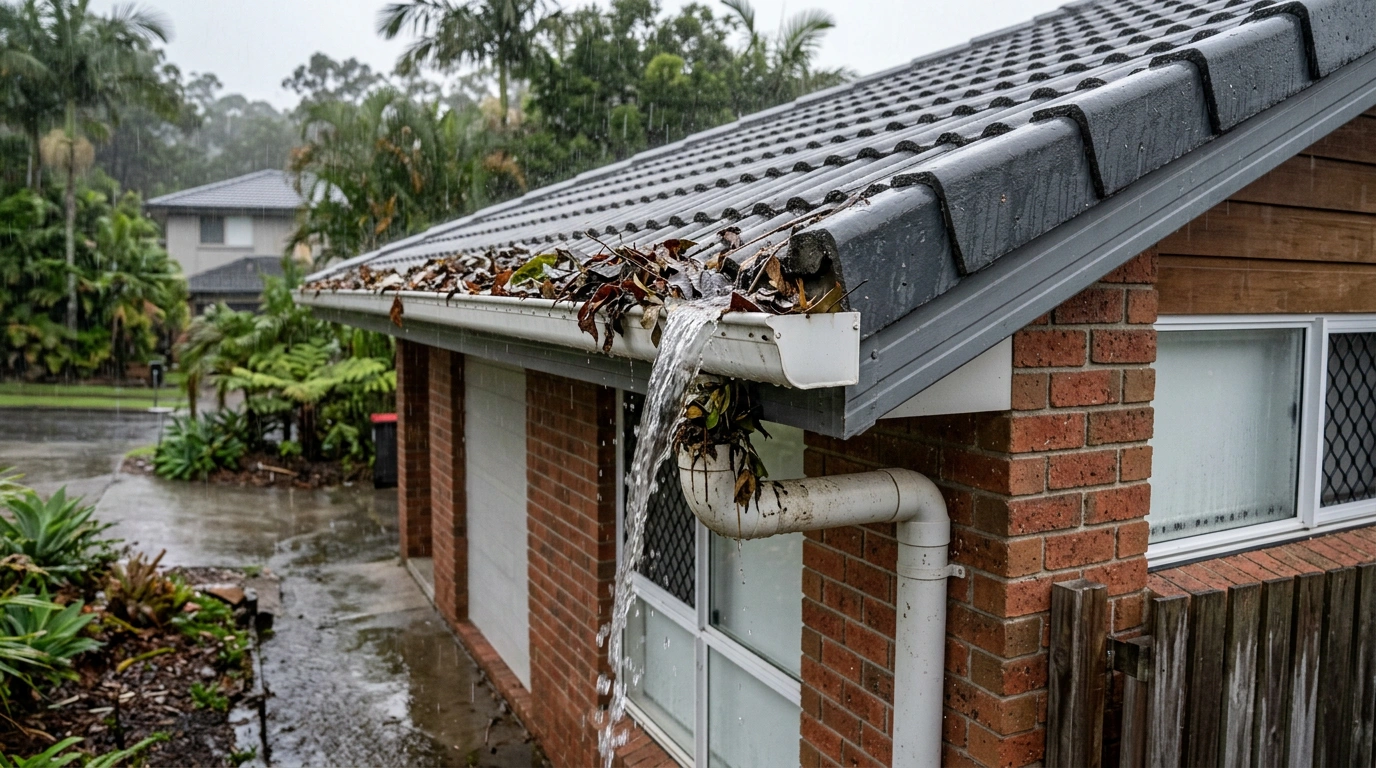
A blockage anywhere along that path sends water back up the system, and it overflows at the weakest point: a gutter, a downpipe joint or a pit next to the house.
Stormwater vs sewer
Stormwater and sewer are two separate systems, and they must stay that way.
- Stormwater carries rainwater only, to the street or waterways.
- Sewer carries waste water from toilets, showers, sinks and appliances to treatment.
Stormwater must not be connected to the sewer. In heavy rain it overloads the sewer network, which can cause sewage overflows into homes and the environment. Waste water must never go into stormwater either. This is also why the overflow relief gully has to sit above ground level, so rain can’t run into it.
Signs of a blocked stormwater drain
- gutters overflowing in heavy rain even after they’ve been cleaned
- downpipes backing up, leaking at joints or bursting off their connections
- water pooling against the house slab or under the house
- boggy lawns that stay wet long after rain
- water bubbling up out of pits and grates during storms
- erosion, or silt washing across paths and driveways
Pre-wet season checklist
The Sunshine Coast wet season runs through summer, so late spring is the time to check:
- Clean gutters and check they fall towards the downpipes
- Check the top of each downpipe is clear of leaves and gumnuts
- Run a hose into each gutter and watch the downpipe flow at the bottom
- Lift pit grates and remove silt, leaves and debris
- Check the kerb outlet in the street isn’t blocked with sand or leaves
- Look for low spots near the house where water pools
- Make sure garden beds and paving slope away from the house
Need a local plumber?
Morrisons Maintenance Plumbing has served Caloundra to Maroochydore for 14+ years. Book a plumber or call 1300 149 288.
Fixes for yard flooding
If the basics don’t solve it, a plumber can find and fix the cause:
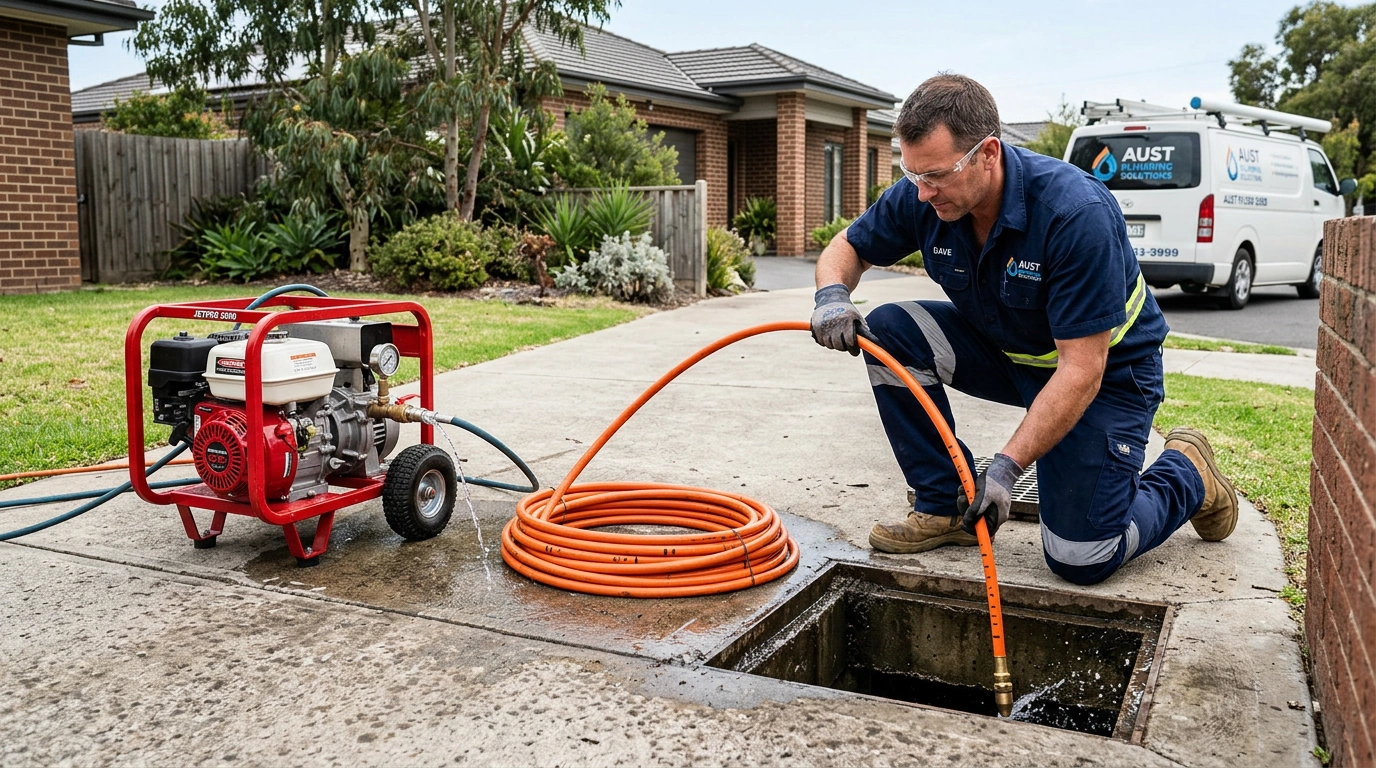
- High-pressure jetting clears silt, leaves and roots from underground stormwater pipes.
- CCTV camera inspection shows cracked, collapsed or root-filled pipes and where they are.
- New pits or grated drains collect water from low spots and driveways.
- Repairing or replacing damaged pipes, including relining where suitable (see our guide to tree roots in drains).
- Re-grading paths and garden areas so water runs away from the house.
New and altered stormwater drainage is regulated work, so it should be done by a licensed plumber and connected to the correct discharge point.
Property managers and body corporates
For rental properties and complexes, stormwater problems tend to show up as tenant complaints in the middle of a storm, when every plumber is busiest. A pre-season check across a portfolio, including gutters, downpipes and pits, catches most issues early. In complexes, check who’s responsible for shared stormwater lines under the body corporate’s by-laws.
Stormwater pipes and pits on your property are the owner’s responsibility. The kerb, street drains and council stormwater network are the council’s. If you’re not sure where a blockage is, a plumber can check. See our blocked drains service or book a stormwater check.
Frequently asked questions
How do I know if my stormwater drain is blocked?
Common signs are gutters overflowing even when they’re clean, downpipes backing up or bursting at joints, water pooling near the house, soggy patches in the yard, and water bubbling up from pits during rain.
Who is responsible for stormwater drains on my property?
Stormwater pipes and pits on your property are the owner’s responsibility. The kerb, street drains and council stormwater network are the council’s. A plumber can check where a blockage is.
How do you unblock a stormwater drain?
Plumbers usually clear stormwater drains with a high-pressure water jetter and use a CCTV camera to find roots, silt or broken pipes. Leaves at the top of downpipes can often be cleared by hand.
Can stormwater be connected to the sewer?
No. Stormwater must not be connected to the sewer. Heavy rain entering the sewer can overload it and cause sewage overflows. Plumbers keep the two systems separate.
When should I get my stormwater drains checked?
Before the wet season, usually late spring, is the best time. Clear gutters and have downpipes and pits checked so they can handle heavy summer storms.
Honest, upfront pricing from a local, family-owned plumber.
Call 1300 149 288 or request a quote. QBCC licence 1296541.