
A tempering valve mixes hot and cold water so water reaches your bathroom taps at no more than 50°C, while the tank stays at 60°C or more to control bacteria. In Queensland a temperature control device is required on new and replacement hot water systems. Most manufacturers recommend servicing every five years.
What a tempering valve does
Hot water systems have two jobs that pull in opposite directions. The water in the tank needs to be hot enough to stop bacteria such as Legionella growing, which means 60°C or more. But water at 60°C can scald skin in seconds, especially for young children and older people.
A tempering valve solves this. It sits on the hot water pipe leaving the system, usually close to the tank, and blends in cold water so the water heading to bathrooms is capped at 50°C. Inside, a temperature-sensitive element adjusts the mix automatically as conditions change.
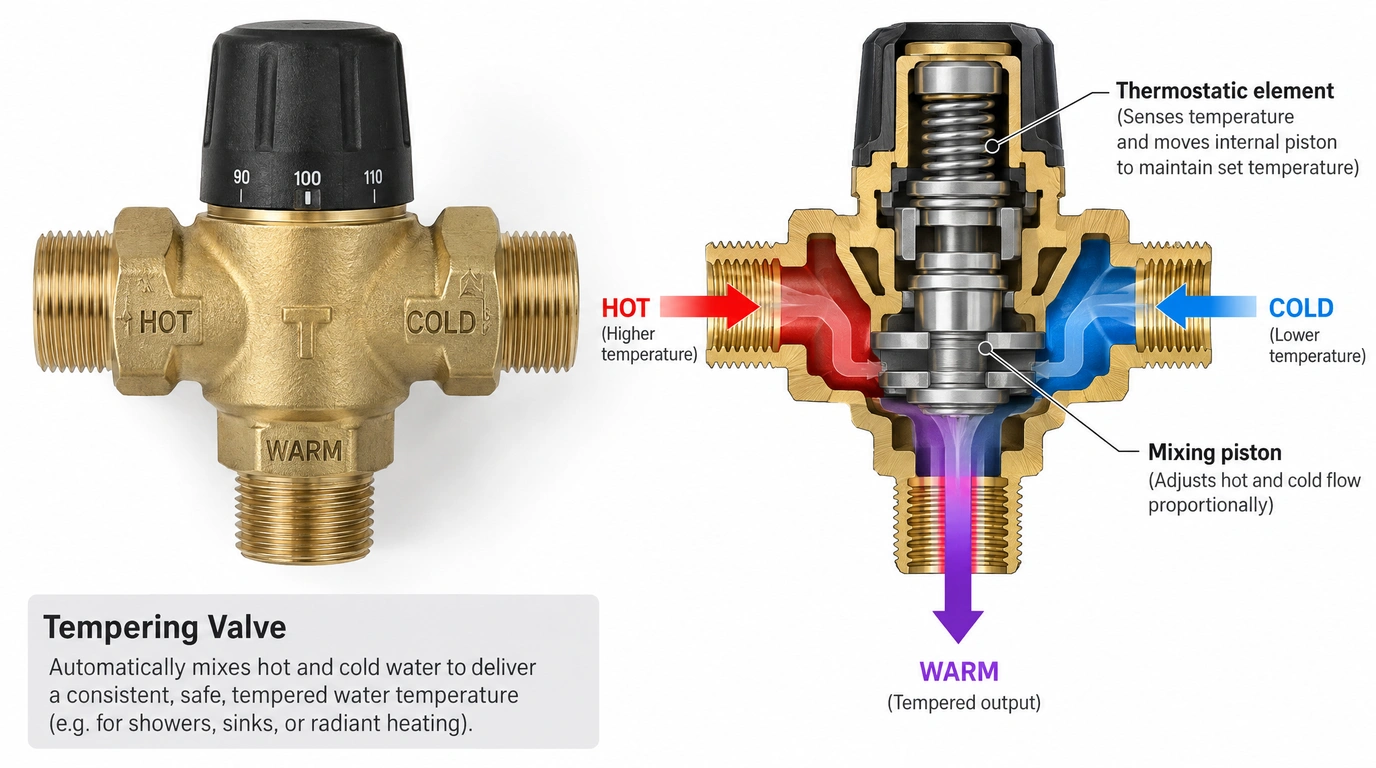
Queensland’s rules
Business Queensland sets out the rules for hot water in homes:
- Stored at 60°C or more to control bacteria.
- Delivered at no more than 50°C to fixtures used for personal hygiene, such as showers, baths and basins.
- A temperature control device must be fitted to all new and replacement hot water systems.
The kitchen and laundry are often left on the untempered hot supply, so water there can be hotter. That’s normal, but worth knowing if you have small children.
Tempering valve vs thermostatic mixing valve (TMV)
The two are often confused:
| Tempering valve | Thermostatic mixing valve (TMV) | |
|---|---|---|
| Where it’s used | Homes | Aged care, hospitals, childcare, schools and other care facilities |
| Temperature control | Caps outlet temperature at around 50°C | Tighter control, often set lower, with fast shut-off if the cold supply fails |
| Maintenance | Service about every five years (manufacturer guidance) | Tested regularly under a maintenance schedule |
For a normal home, a tempering valve is what’s required.
Need a local plumber?
Morrisons Maintenance Plumbing has served Caloundra to Maroochydore for 14+ years. Book a plumber or call 1300 149 288.
Signs your tempering valve is failing
- Shower temperature swings between hot and cold without touching the tap.
- Water that’s too hot at bathroom taps, or only lukewarm even with the hot tap full on.
- A dripping valve or water around it.
- Hot water in the kitchen but not the bathroom, which points to a blocked or failed valve on the tempered line.
- Reduced hot water flow in bathrooms only, often from a clogged strainer inside the valve.
Hard water and debris from old pipes can build up inside the valve and stop it working properly. On the Sunshine Coast, older homes with galvanised pipework are more likely to send debris through.
How to check your bathroom water temperature
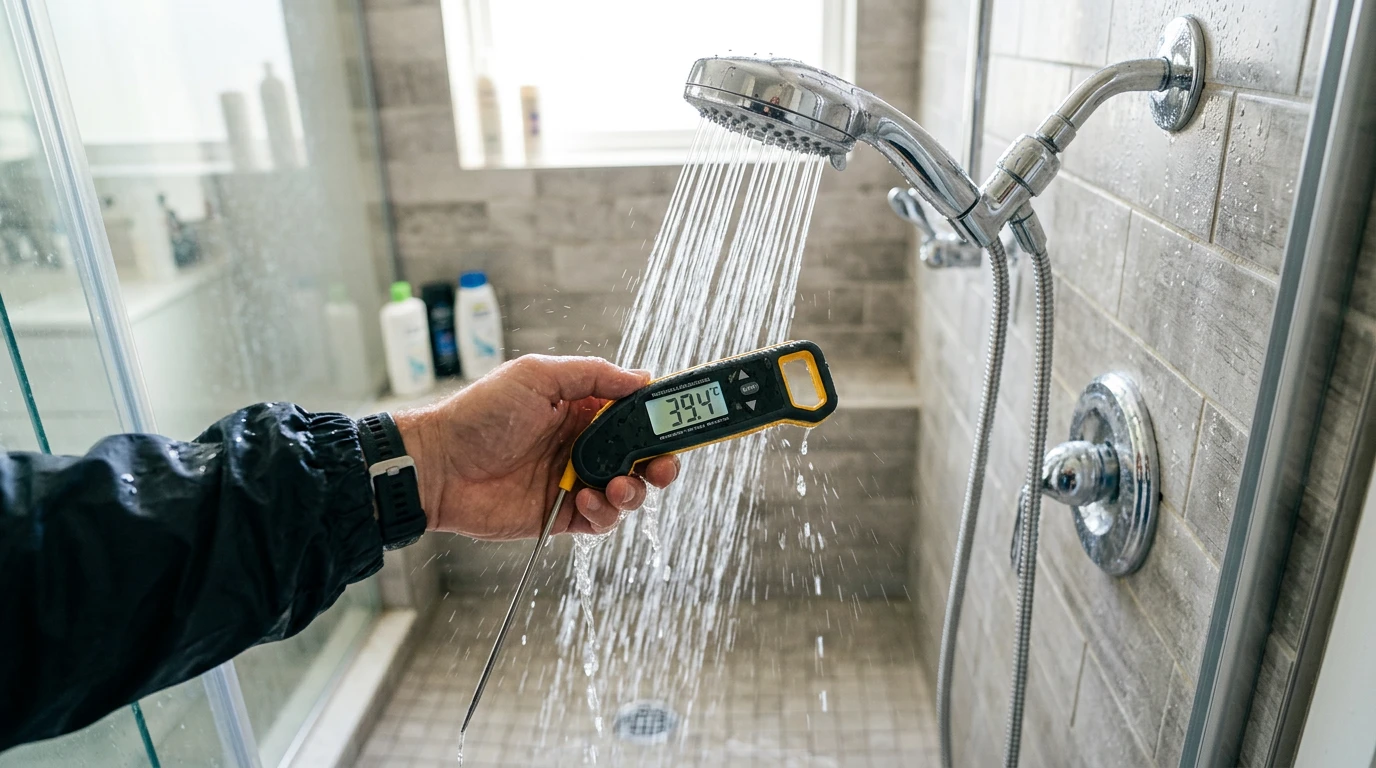
You can do a quick check with a cooking or digital thermometer:
- Run the hot tap at the bathroom basin or shower for a minute or two until the temperature settles.
- Fill a cup and put the thermometer in it straight away.
- Compare the reading with the 50°C limit.
If it reads well above 50°C, the tempering valve may have failed, may be set incorrectly, or may not be fitted at all. If it’s well below and the shower never gets properly warm, the valve may be blocked or failing. In either case, don’t try to adjust the valve yourself: it’s a safety device, and setting it is licensed plumbing work.
Older homes with a hot water system installed before the rules came in may not have a tempering valve. It’s worth having one fitted when the system is next replaced, or sooner if young children or older people live in the home.
Servicing and replacement
Most manufacturers recommend servicing a tempering valve about every five years, and more often in areas with hard water. A service usually involves cleaning the strainers, checking the element and testing the outlet temperature.
Replacement is common:
- when the hot water system is replaced, since the valve is often due too
- when the valve can no longer hold a steady temperature
- when it’s leaking or seized
Installing, servicing or replacing a tempering valve is regulated plumbing work in Queensland and needs a licensed plumber. Because it’s a safety device, it should be tested after any work on the hot water system.
If your hot water system is also getting on, our guide on how long hot water systems last covers the other warning signs, and our guide to hot water system cost explains replacement pricing. See our hot water system services or book a service.
Frequently asked questions
What does a tempering valve do?
A tempering valve mixes hot water from the tank with cold water so water delivered to bathroom taps and showers is no hotter than 50°C. It lets the tank store water hot enough to control bacteria while reducing the risk of scalding.
Is a tempering valve required in Queensland?
Yes. Queensland requires hot water to be delivered to bathroom and personal hygiene fixtures at no more than 50°C, and a temperature control device must be fitted on all new and replacement hot water systems.
What temperature should my hot water system be set to?
The tank should store water at 60°C or more to control bacteria such as Legionella. A tempering valve then reduces the temperature at bathroom outlets to a maximum of 50°C.
How often should a tempering valve be replaced or serviced?
Most manufacturers recommend servicing about every five years, and sooner in areas with hard water. Replacement is common when the hot water system is replaced or if the valve stops controlling temperature.
What are the signs of a faulty tempering valve?
Shower water that swings between hot and cold, water that is too hot or only lukewarm at bathroom taps, a dripping valve, or hot water in the kitchen but not in the bathroom can all point to a failing tempering valve.
Honest, upfront pricing from a local, family-owned plumber.
Call 1300 149 288 or request a quote. QBCC licence 1296541.