
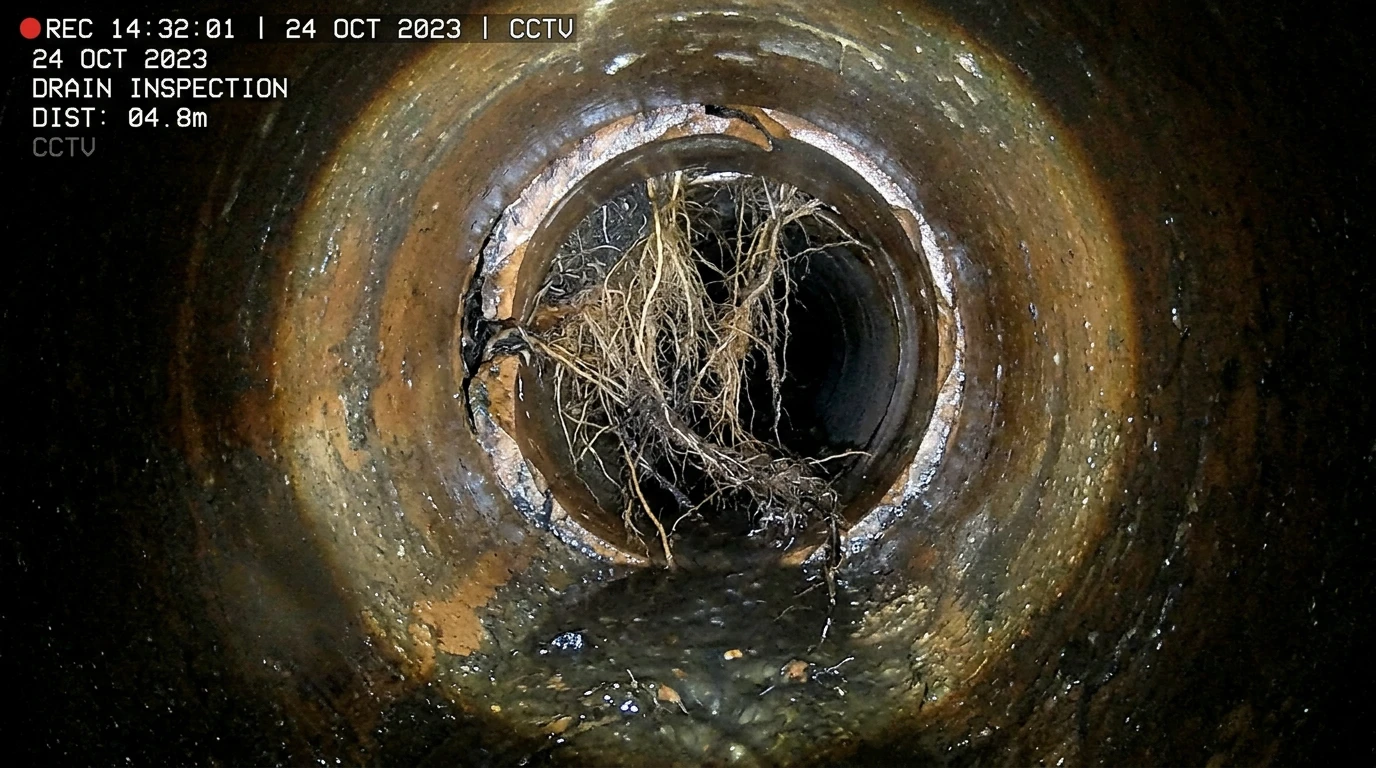
Tree roots find their way into drains through cracks and old joints, then grow into a mat that catches waste. A CCTV camera inspection shows exactly where and how bad the damage is. Light roots can be cut out with a jetter, but if the pipe is cracked or keeps blocking, relining or replacing that section is the lasting fix.
How roots get into drains
Roots go looking for water and nutrients, and a sewer or stormwater pipe offers both. Warm, moist air escaping from a tiny crack or a loose joint draws fine roots in. Once inside, they grow quickly into a dense mat that catches toilet paper, wipes and fat, and eventually blocks the pipe.
Older homes are most at risk. Many established Sunshine Coast suburbs have clay or earthenware sewer pipes laid in short lengths with many joints, and those joints are where roots get in. Newer PVC pipes have fewer joints and resist roots better, but they can still be damaged by ground movement.
Trees and shrubs with aggressive root systems planted close to the drain line are the usual culprits, including some figs, palms and large gums.
Signs of roots in your drains
- drains that are slow or block again weeks or months after being cleared
- gurgling toilets and sinks
- sewage overflowing from the overflow relief gully outside
- soggy or unusually green patches of lawn along the pipe route
- sewer smells in the yard
If a blockage keeps coming back, it’s almost always a problem with the pipe itself rather than what’s being flushed.
How a CCTV drain inspection works
A CCTV drain inspection takes the guesswork out of it. The plumber feeds a waterproof camera on a flexible cable into the drain through an inspection opening, and watches the live picture on a screen. The inspection shows:
- roots, and how far they’ve spread
- cracks, displaced joints and collapsed sections
- dips or bellies where waste collects
- the exact distance to the problem, and often its depth
Many cameras have a locator, so the plumber can mark the spot on the ground above. You can usually watch the footage and get a copy, which is useful for insurance, a property sale or a body corporate.
Need a local plumber?
Morrisons Maintenance Plumbing has served Caloundra to Maroochydore for 14+ years. Book a plumber or call 1300 149 288.
Your options
| Option | How it works | Best for | Limits |
|---|---|---|---|
| Root cutting and jetting | A drain machine cuts the roots, then a high-pressure jetter flushes the pipe clean | Clearing a blockage fast; light root intrusion | Roots grow back through the same cracks, often within months |
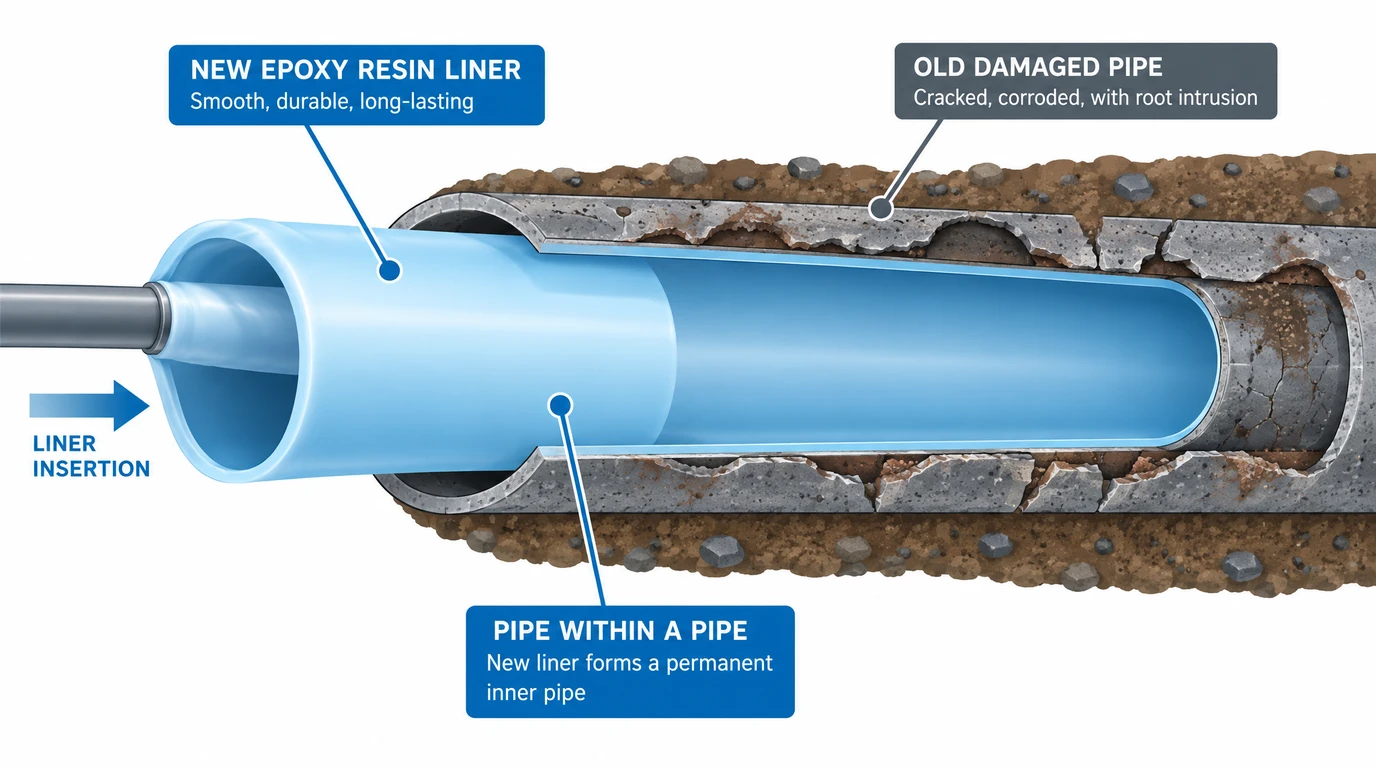
| Pipe relining | A resin-soaked liner is pulled into the old pipe and cured in place, forming a new pipe inside the old one | Cracked or root-damaged pipes under driveways, paths, gardens or slabs | Not suitable for a fully collapsed pipe or a pipe that’s badly sagged |
| Dig up and replace | The damaged section is excavated and replaced with new pipe | Collapsed, badly sagged or undersized pipes | More digging and restoring the surface afterwards |
Relining seals the cracks and joints roots use to get in, so it deals with the cause. It suits pipes that are cracked but still in line. If the camera shows a collapse or a big dip, replacing that section is usually the better fix.
Preventing roots coming back
- Plant with care. Keep trees with aggressive roots well away from sewer and stormwater lines. Ask for a drain plan before planting big trees.
- Consider removing problem trees near the drain line if the damage keeps recurring.
- Maintain before it blocks. If you know you have roots but can’t fix the pipe yet, scheduled jetting can keep the drain flowing.
- Fix the pipe. Relining or replacing the damaged section is the only lasting solution.
Who pays?
Private sewer pipes on your property are the owner’s responsibility. If the camera shows the problem is in Unitywater’s sewer network rather than your pipes, Unitywater is responsible for fixing it. A CCTV inspection is the clearest way to show where the damage is. We explain the split in detail in our guide on who fixes what with Unitywater.
For recurring blockages, see our blocked drains service or book a CCTV inspection.
Frequently asked questions
How do I know if tree roots are in my drains?
Common signs are drains that are slow or keep blocking, gurgling toilets, sewage overflowing from the overflow relief gully outside, and soggy or unusually green patches of lawn. A CCTV drain inspection confirms it.
What is a CCTV drain inspection?
A plumber feeds a waterproof camera into the drain to see inside the pipe. It shows blockages, roots, cracks and collapsed sections, and can locate the problem so repairs are targeted rather than guesswork.
What is pipe relining?
Pipe relining repairs a damaged drain from the inside. A resin-soaked liner is inserted into the old pipe and cured in place, creating a new pipe within the old one, usually without digging up the whole line.
Is pipe relining better than replacing the pipe?
Relining avoids most digging, so it suits pipes under driveways, paths, gardens and slabs. Replacement can be better if the pipe has collapsed, sagged badly or is the wrong size. A CCTV inspection shows which suits your drain.
Will cutting out tree roots fix the problem for good?
Not usually. Cutting or jetting clears the roots, but they tend to grow back through the same cracks or joints. For a lasting fix, the damaged section needs relining or replacing.
Honest, upfront pricing from a local, family-owned plumber.
Call 1300 149 288 or request a quote. QBCC licence 1296541.