
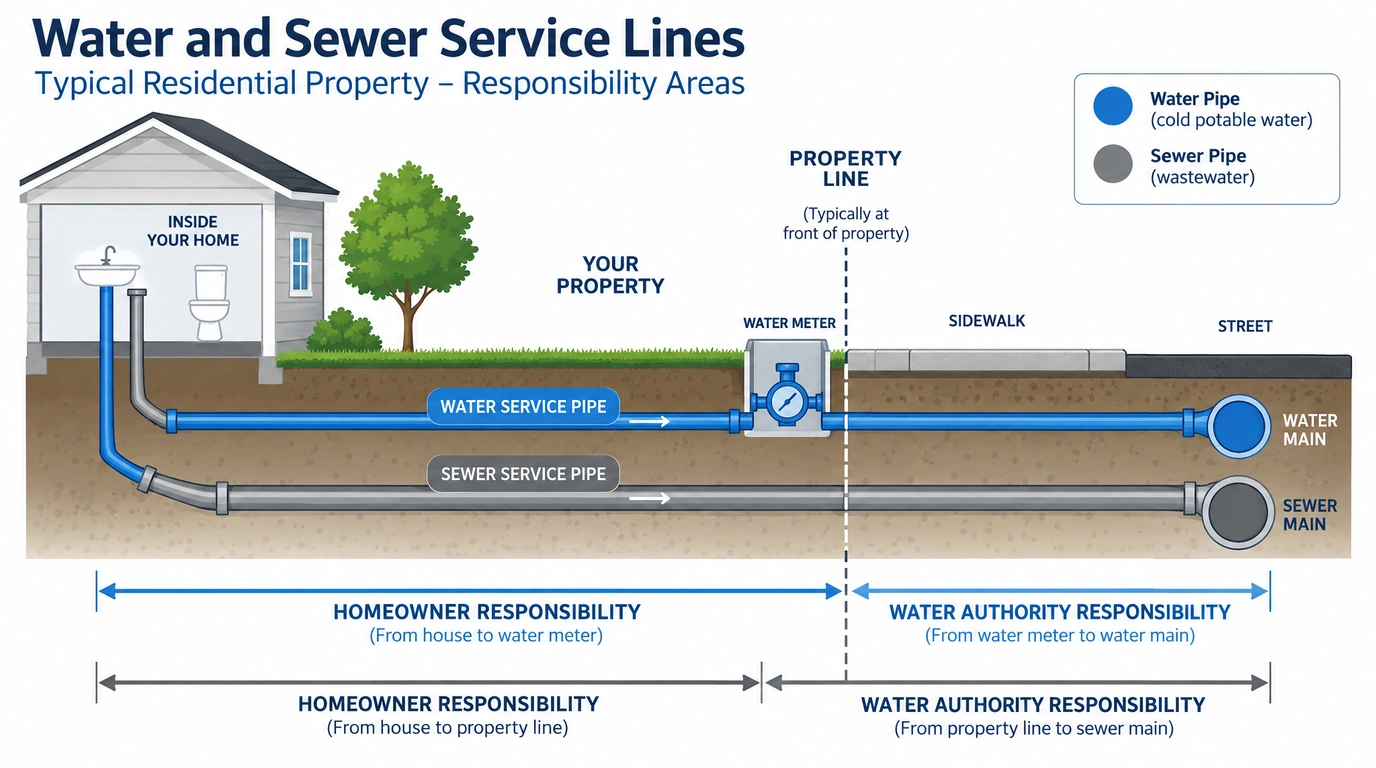
Unitywater looks after its water mains, meters and sewer network. Pipes on your side of the meter, and the private sewer drains on your property, are the owner’s responsibility to maintain and repair with a licensed plumber. If you’re not sure where a problem sits, call a plumber to locate it.
The short answer
Unitywater supplies water and sewerage services across the Sunshine Coast, Moreton Bay and Noosa. This is how responsibility usually splits for a house. Units and townhouses can differ, with some pipes shared under the body corporate.
| Part of the system | Who’s responsible | Who to call |
|---|---|---|
| Water main in the street, up to the meter | Unitywater | Unitywater |
| The water meter | Unitywater | Unitywater |
| Water pipes after the meter, to and inside the house | Property owner | A licensed plumber |
| Private sewer drains on the property | Property owner | A licensed plumber |
| Sewer main and Unitywater’s sewer network | Unitywater | Unitywater, or a plumber to confirm where the blockage is |
| Leaks in the footpath, road or at a fire hydrant | Unitywater | Unitywater |
This article is general information. Check Unitywater’s own guidance for your specific property.
Water leaks
If water is leaking between the meter and the house, or anywhere inside, it’s a private leak and the owner’s responsibility to find and fix. Common signs are a higher bill, soggy ground between the meter and the house, or the meter moving when all the water is off.
The meter test tells you quickly whether you have a leak on your side. Our guide on how to find a water leak walks through it, and our leak detection service can pinpoint hidden leaks under slabs or underground.
If water is leaking in the street, the footpath or at the meter itself, report it to Unitywater.
Blocked sewers
Sewer blockages are where it gets confusing, because you can’t see where the private drain ends and Unitywater’s sewer begins.
- Private sewer drains carry waste from your fixtures to the connection point with Unitywater’s network. Blockages in these pipes are the owner’s responsibility.
- Unitywater’s sewer network starts at the connection point, often on your property or near the boundary, and includes the sewer main. Blockages there are Unitywater’s to fix.
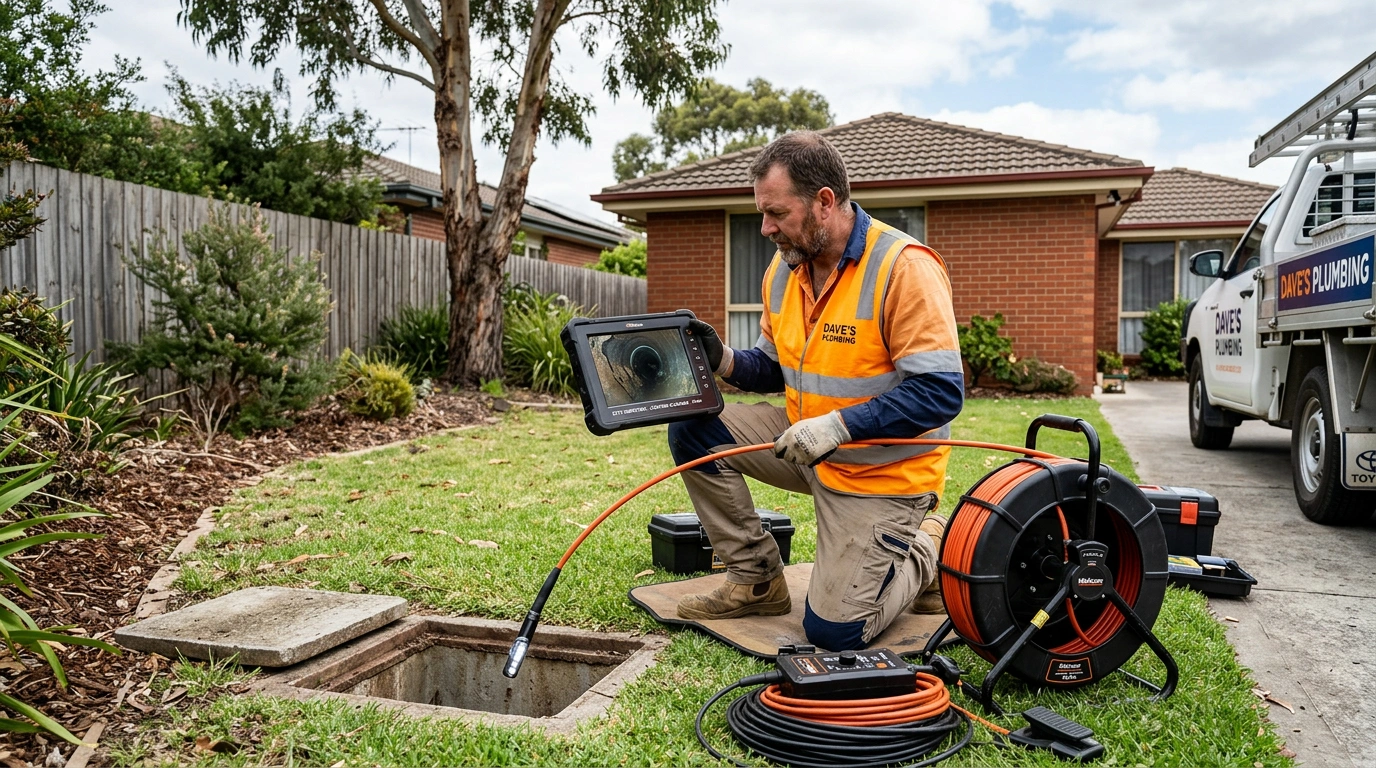
In practice, a plumber called to a blocked drain will clear the private line and, if they find the blockage is in Unitywater’s network, the matter is referred to Unitywater. Unitywater’s page on blocked sewer responsibility explains how this is handled with plumbers. A CCTV inspection is the clearest way to show where the problem is.
Signs of a blocked sewer include several slow drains at once, gurgling toilets and sewage overflowing from the overflow relief gully outside. Tree roots are a common cause; see our guide to tree roots in drains.
Need a local plumber?
Morrisons Maintenance Plumbing has served Caloundra to Maroochydore for 14+ years. Book a plumber or call 1300 149 288.
The concealed leak allowance
If you’ve had a hidden leak on your side of the meter, Unitywater may credit part of the extra charges. The concealed leak allowance applies when:
- the leak was hidden, such as underground, in concrete or under the building
- it was repaired by a licensed plumber
- you apply within 12 months of the repair
- it’s the first claim for the property
It credits 70% of the excess water charges (100% for eligible pensioners) and 100% of the excess sewerage charges. Leaks from taps, toilets, appliances, irrigation and pools aren’t covered, because they’re visible or within your control. Keep the plumber’s invoice showing where the leak was and when it was fixed. Terms can change, so check Unitywater’s current conditions before you apply.
Tenants and landlords
In a rental, tenants should report leaks and blockages to the landlord or property manager straight away. Repairs to the property’s pipes and drains are the owner’s responsibility, and in an emergency tenants can arrange urgent repairs under Queensland’s tenancy rules. If the tenant pays for water, a leak can also affect their bill; our guide to water efficiency certificates explains the water charging rules.
For problems on your side of the meter, see our blocked drains service or book a plumber.
Frequently asked questions
Is Unitywater responsible for my water pipes?
Unitywater is responsible for its water mains and the meter. Pipes on your side of the meter, running to the house and inside it, are the property owner’s responsibility to repair using a licensed plumber.
Who fixes a blocked sewer, me or Unitywater?
If the blockage is in the private sewer drains on your property, the owner arranges and pays for a plumber. If it’s in Unitywater’s sewer network, Unitywater fixes it. A plumber can locate the blockage to confirm which side it’s on.
What should I do if there's a water leak in the street?
Leaks in the footpath, road or at a fire hydrant are usually on Unitywater’s network. Report them to Unitywater. Leaks on your side of the meter are yours to fix with a plumber.
What is the Unitywater concealed leak allowance?
It’s a one-off bill credit for a hidden leak, such as one underground, in concrete or under the building, repaired by a licensed plumber. It must be claimed within 12 months and credits part of the excess water charges and the excess sewerage charges.
Does the concealed leak allowance cover leaking taps or toilets?
No. Leaks from taps, toilets, appliances, irrigation and pools are excluded because they’re visible or within your control. The allowance is for hidden leaks you couldn’t reasonably have known about.
Honest, upfront pricing from a local, family-owned plumber.
Call 1300 149 288 or request a quote. QBCC licence 1296541.